About the Project
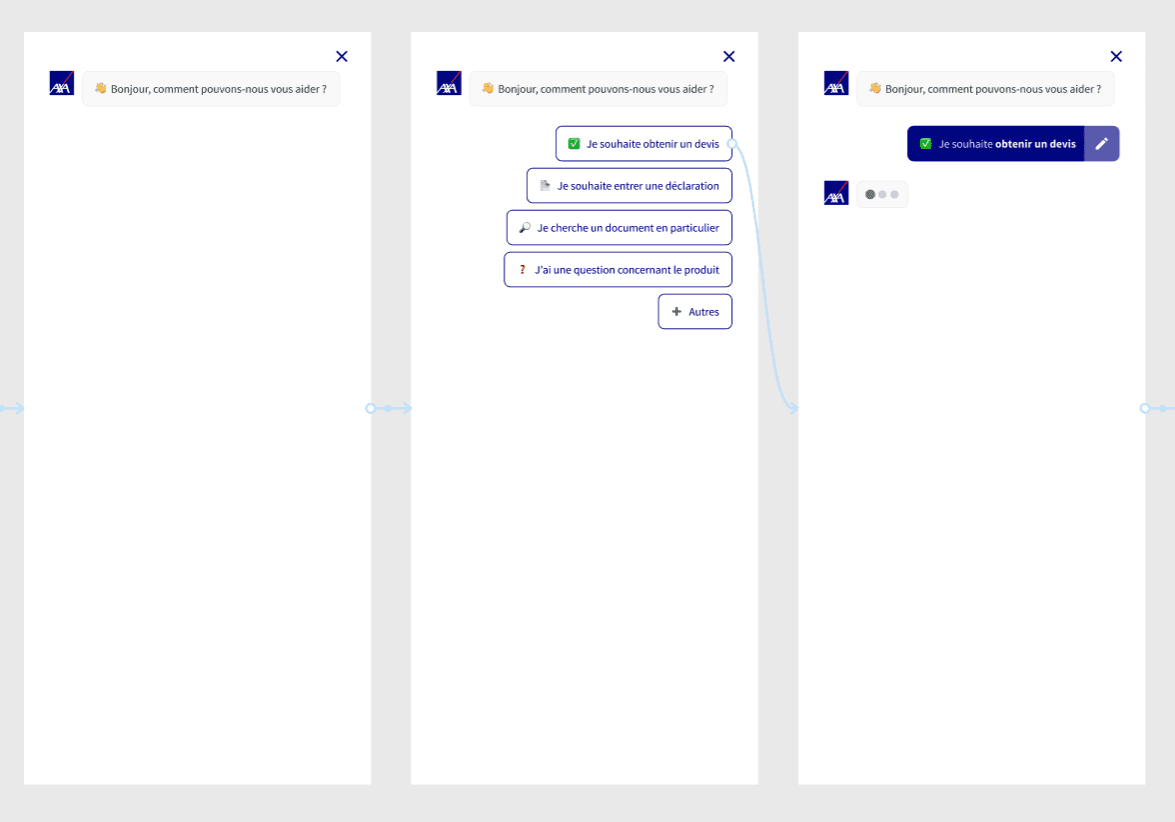
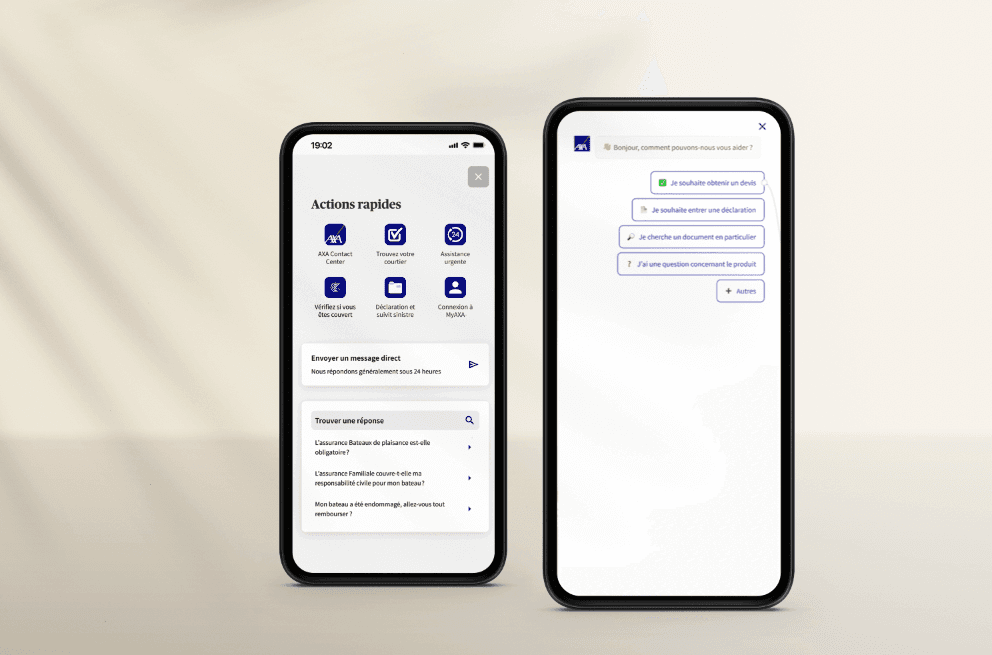
A contextual chatbot was embedded directly on product pages to transform quote requests into a simple conversational experience. The bot walks users through a guided, step-by-step flow that adapts to their answers, pre-populates known fields, and delivers an immediate, tailored quote. It also captures lead details, surfaces relevant product information during the conversation, and supports escalation to a human advisor for complex cases — reducing friction, accelerating time-to-quote, and improving conversion and satisfaction.
Challenges
Our research with the UX team showed mixed reactions toward chatbot interactions. While users appreciate efficiency, their expectations for AI-powered experiences are increasing rapidly. Many participants still prefer speaking with a real human—especially when they encounter problems or need reassurance.
Timeline & milestones
✅ Project Kickoff & Scope Definition – Align stakeholders and define objectives.
✅ User Research & Discovery – Conduct interviews, surveys, and competitor analysis.
✅ Ideation & Scenario Mapping – Map user journeys and define key chatbot conversation flows.
✅ Information Architecture – Card sorting and tree testing to validate structure and navigation.
✅ Wireframing – Low-fidelity wireframes for desktop and mobile to explore interface options.
✅ User Testing (Wireframes) – Gather feedback and refine interaction flows.
✅ Prototyping – Build interactive prototypes integrating chatbot conversations.
✅ AI & Chatbot Logic Integration – Define intents, fallback rules, and connect to quote generation backend.
✅ SteerCo Alignment & Iteration – Present updates, validate decisions, and secure stakeholder buy-in
About the Project
A contextual chatbot was embedded directly on product pages to transform quote requests into a simple conversational experience. The bot walks users through a guided, step-by-step flow that adapts to their answers, pre-populates known fields, and delivers an immediate, tailored quote. It also captures lead details, surfaces relevant product information during the conversation, and supports escalation to a human advisor for complex cases — reducing friction, accelerating time-to-quote, and improving conversion and satisfaction.
Challenges
Our research with the UX team showed mixed reactions toward chatbot interactions. While users appreciate efficiency, their expectations for AI-powered experiences are increasing rapidly. Many participants still prefer speaking with a real human—especially when they encounter problems or need reassurance.
Timeline & milestones
✅ Project Kickoff & Scope Definition – Align stakeholders and define objectives.
✅ User Research & Discovery – Conduct interviews, surveys, and competitor analysis.
✅ Ideation & Scenario Mapping – Map user journeys and define key chatbot conversation flows.
✅ Information Architecture – Card sorting and tree testing to validate structure and navigation.
✅ Wireframing – Low-fidelity wireframes for desktop and mobile to explore interface options.
✅ User Testing (Wireframes) – Gather feedback and refine interaction flows.
✅ Prototyping – Build interactive prototypes integrating chatbot conversations.
✅ AI & Chatbot Logic Integration – Define intents, fallback rules, and connect to quote generation backend.
✅ SteerCo Alignment & Iteration – Present updates, validate decisions, and secure stakeholder buy-in
About the Project
A contextual chatbot was embedded directly on product pages to transform quote requests into a simple conversational experience. The bot walks users through a guided, step-by-step flow that adapts to their answers, pre-populates known fields, and delivers an immediate, tailored quote. It also captures lead details, surfaces relevant product information during the conversation, and supports escalation to a human advisor for complex cases — reducing friction, accelerating time-to-quote, and improving conversion and satisfaction.
Challenges
Our research with the UX team showed mixed reactions toward chatbot interactions. While users appreciate efficiency, their expectations for AI-powered experiences are increasing rapidly. Many participants still prefer speaking with a real human—especially when they encounter problems or need reassurance.
Timeline & milestones
✅ Project Kickoff & Scope Definition – Align stakeholders and define objectives.
✅ User Research & Discovery – Conduct interviews, surveys, and competitor analysis.
✅ Ideation & Scenario Mapping – Map user journeys and define key chatbot conversation flows.
✅ Information Architecture – Card sorting and tree testing to validate structure and navigation.
✅ Wireframing – Low-fidelity wireframes for desktop and mobile to explore interface options.
✅ User Testing (Wireframes) – Gather feedback and refine interaction flows.
✅ Prototyping – Build interactive prototypes integrating chatbot conversations.
✅ AI & Chatbot Logic Integration – Define intents, fallback rules, and connect to quote generation backend.
✅ SteerCo Alignment & Iteration – Present updates, validate decisions, and secure stakeholder buy-in
Process & Methodology
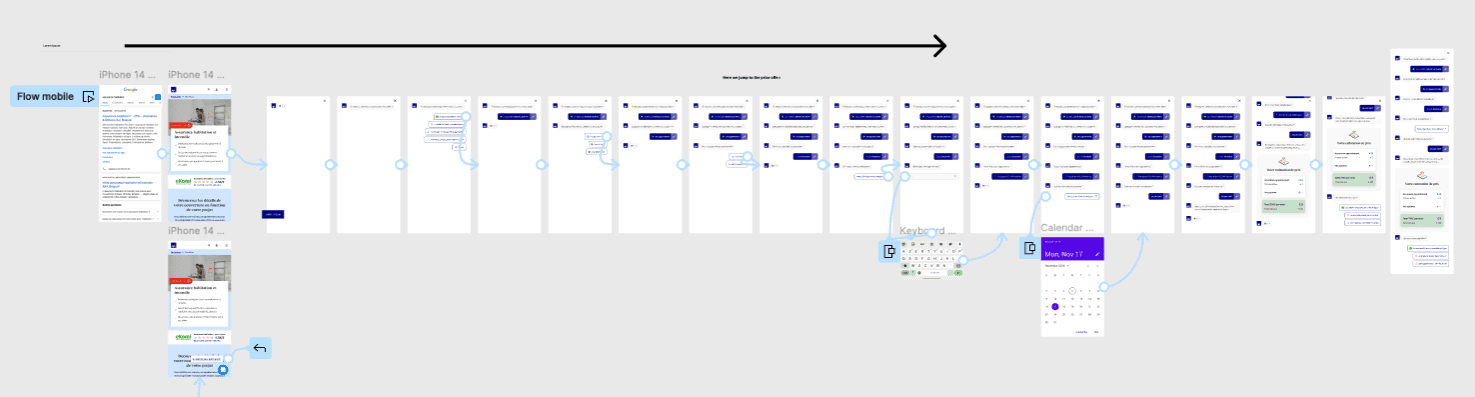
We added a fully functional chatbot to the product page, offering users a new, interactive way to request a quote. The project focused not only on functionality but also on creating a smooth, engaging experience, with special attention to micro-animations in the Figma prototype.
Key highlights:
Interactive Quote Flow: Users can get a quote step by step through a conversational interface, making the process more intuitive and engaging.
Micro-Animations: Carefully designed animations enhance clarity and provide visual feedback, improving the overall user experience.
Prototype Validation: The Figma prototype allowed early testing and iteration of interactions before development, ensuring a polished final experience.
User-Centered Design: The chatbot was designed based on research insights, optimizing usability and addressing user expectations for efficiency and guidance.
Process & Methodology
We added a fully functional chatbot to the product page, offering users a new, interactive way to request a quote. The project focused not only on functionality but also on creating a smooth, engaging experience, with special attention to micro-animations in the Figma prototype.
Key highlights:
Interactive Quote Flow: Users can get a quote step by step through a conversational interface, making the process more intuitive and engaging.
Micro-Animations: Carefully designed animations enhance clarity and provide visual feedback, improving the overall user experience.
Prototype Validation: The Figma prototype allowed early testing and iteration of interactions before development, ensuring a polished final experience.
User-Centered Design: The chatbot was designed based on research insights, optimizing usability and addressing user expectations for efficiency and guidance.
Process & Methodology
We added a fully functional chatbot to the product page, offering users a new, interactive way to request a quote. The project focused not only on functionality but also on creating a smooth, engaging experience, with special attention to micro-animations in the Figma prototype.
Key highlights:
Interactive Quote Flow: Users can get a quote step by step through a conversational interface, making the process more intuitive and engaging.
Micro-Animations: Carefully designed animations enhance clarity and provide visual feedback, improving the overall user experience.
Prototype Validation: The Figma prototype allowed early testing and iteration of interactions before development, ensuring a polished final experience.
User-Centered Design: The chatbot was designed based on research insights, optimizing usability and addressing user expectations for efficiency and guidance.
Key outcomes & impact
This project demonstrated that what seems like a promising idea at first glance does not always translate into clear results. Although the chatbot offered a novel way for users to get a quote, it was ultimately deprioritized due to its significant IT impact and the unclear benefits for both users and the business.
Key takeaways:
Validate early: Initial assumptions should always be tested with real users before heavy investment.
Balance effort vs. impact: Even innovative ideas may not justify complex implementation if benefits are uncertain.
Strategic prioritization: Decisions need to consider both user value and operational feasibility.
Learn from iteration: Insights from this prototype informed future projects and decision-making processes.
Key outcomes & impact
This project demonstrated that what seems like a promising idea at first glance does not always translate into clear results. Although the chatbot offered a novel way for users to get a quote, it was ultimately deprioritized due to its significant IT impact and the unclear benefits for both users and the business.
Key takeaways:
Validate early: Initial assumptions should always be tested with real users before heavy investment.
Balance effort vs. impact: Even innovative ideas may not justify complex implementation if benefits are uncertain.
Strategic prioritization: Decisions need to consider both user value and operational feasibility.
Learn from iteration: Insights from this prototype informed future projects and decision-making processes.
Key outcomes & impact
This project demonstrated that what seems like a promising idea at first glance does not always translate into clear results. Although the chatbot offered a novel way for users to get a quote, it was ultimately deprioritized due to its significant IT impact and the unclear benefits for both users and the business.
Key takeaways:
Validate early: Initial assumptions should always be tested with real users before heavy investment.
Balance effort vs. impact: Even innovative ideas may not justify complex implementation if benefits are uncertain.
Strategic prioritization: Decisions need to consider both user value and operational feasibility.
Learn from iteration: Insights from this prototype informed future projects and decision-making processes.