A reserve of money
A revolving credit: money set aside that you can use whenever you need it, and repay at your own rhythm.
Case study · 2025–2026 · Confidential client
The answer of a major bank to Klarna, Scalapay and the other online payment platforms young people love: one credit that works as a reserve of money and as payments split in slices, designed to protect customers from going too deep into debt.
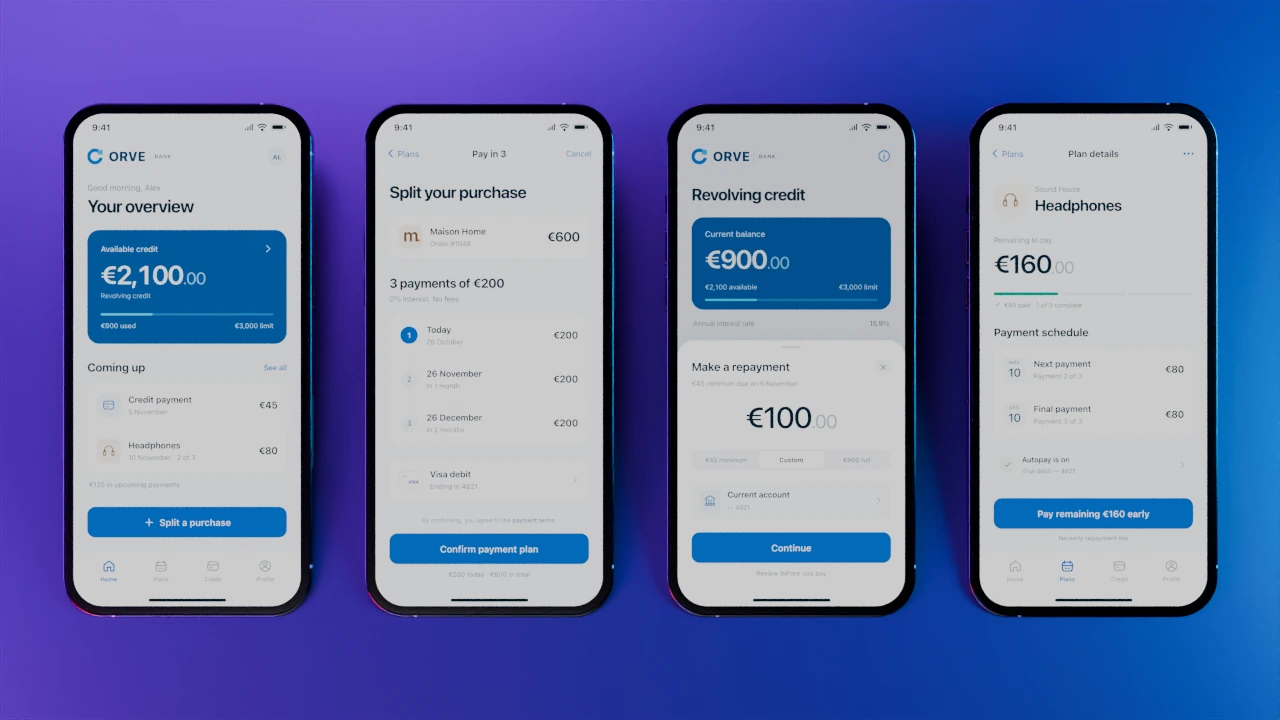
Shown with the client anonymised. Names, internal figures and product details are removed, and the working files appear from a distance on purpose: what this page shows is the scale and the method, not the fine print.
Klarna, Scalapay and the other online payment platforms have changed what people expect from credit, young people above all: pay in a few taps, split it in slices, barely feel it. This is a major bank’s answer. It still ran two ageing revolving-credit products, widely held but barely used: a separate platform, a physical card, paper statements, no link to daily banking.
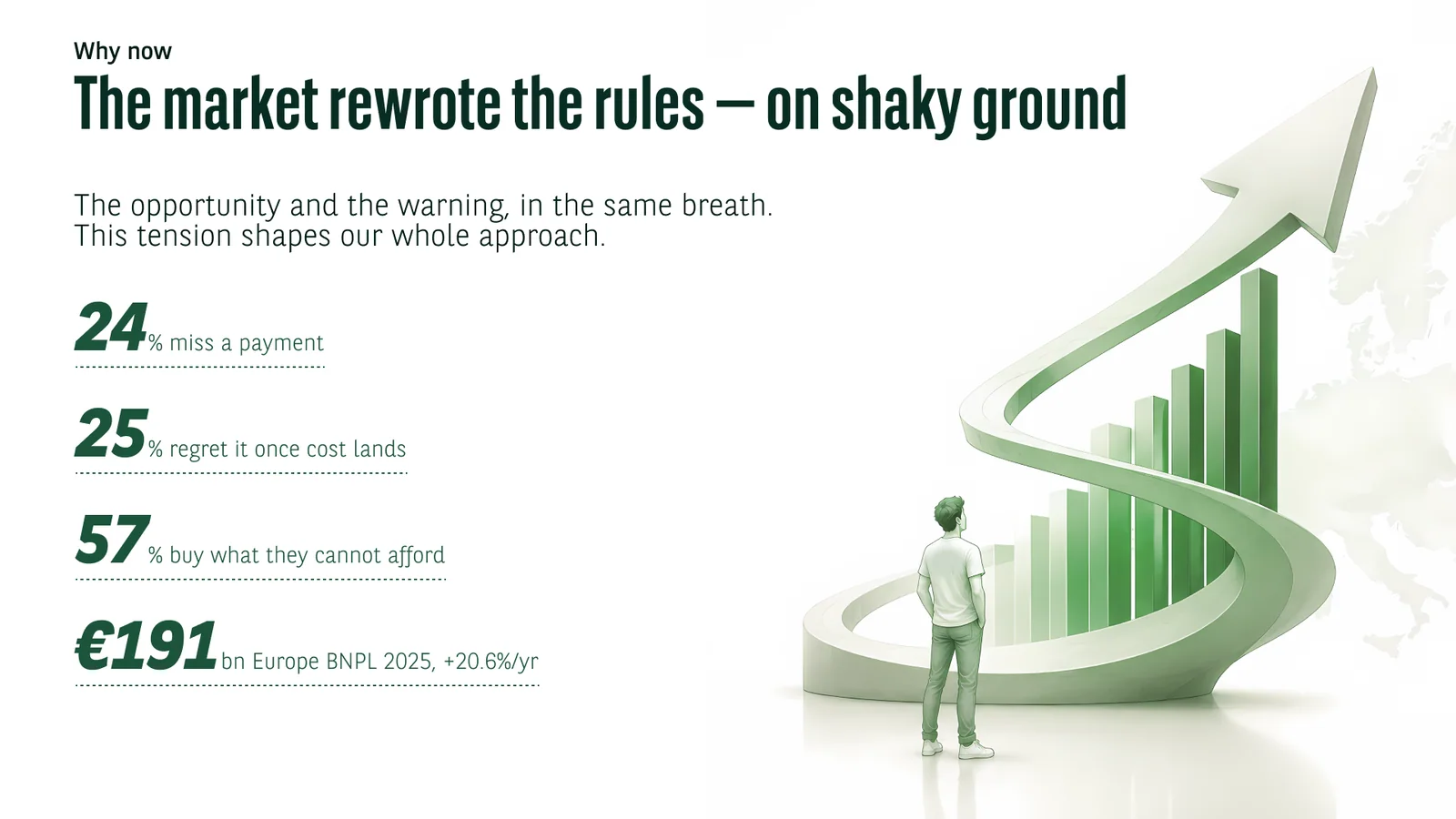
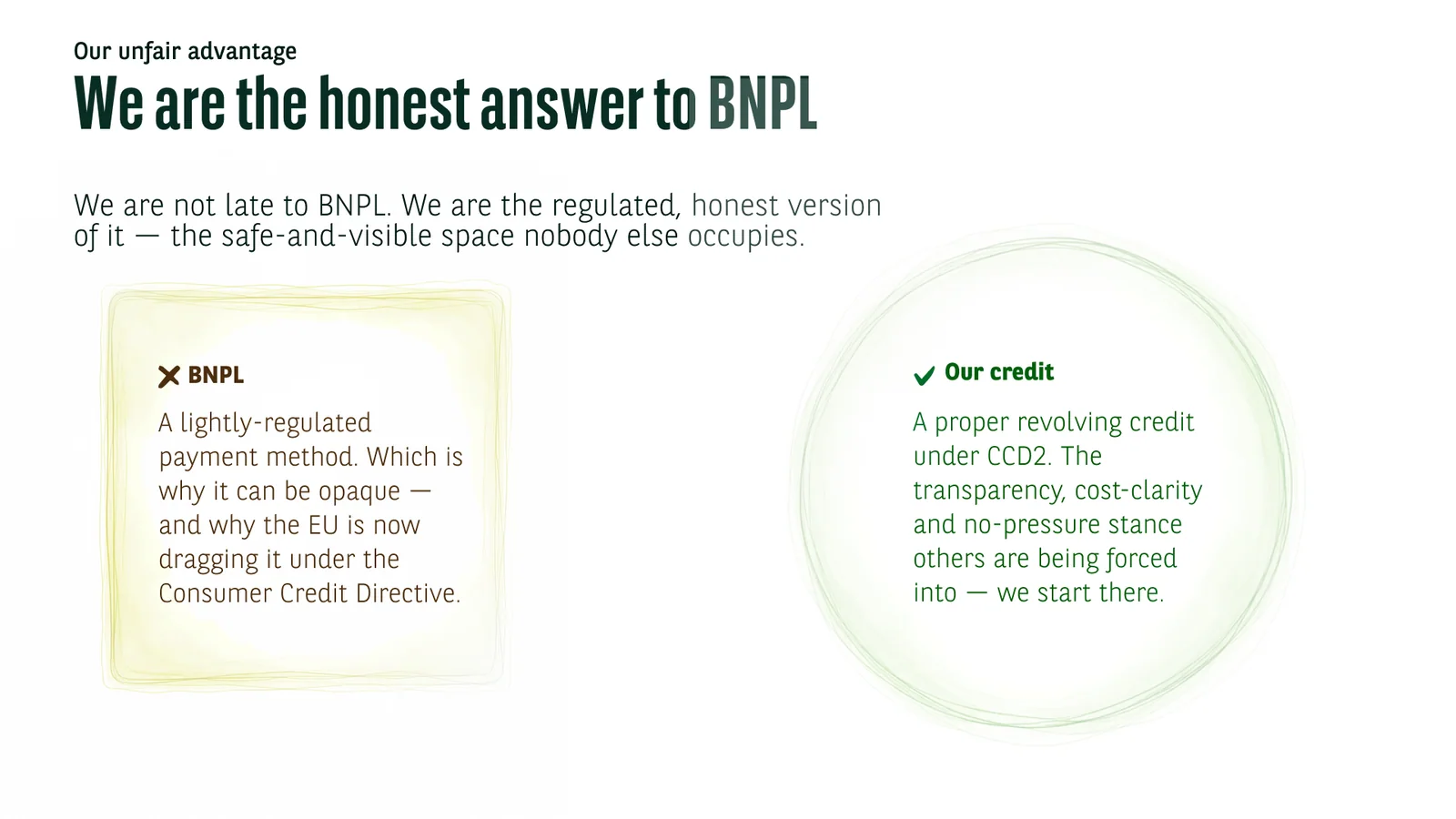
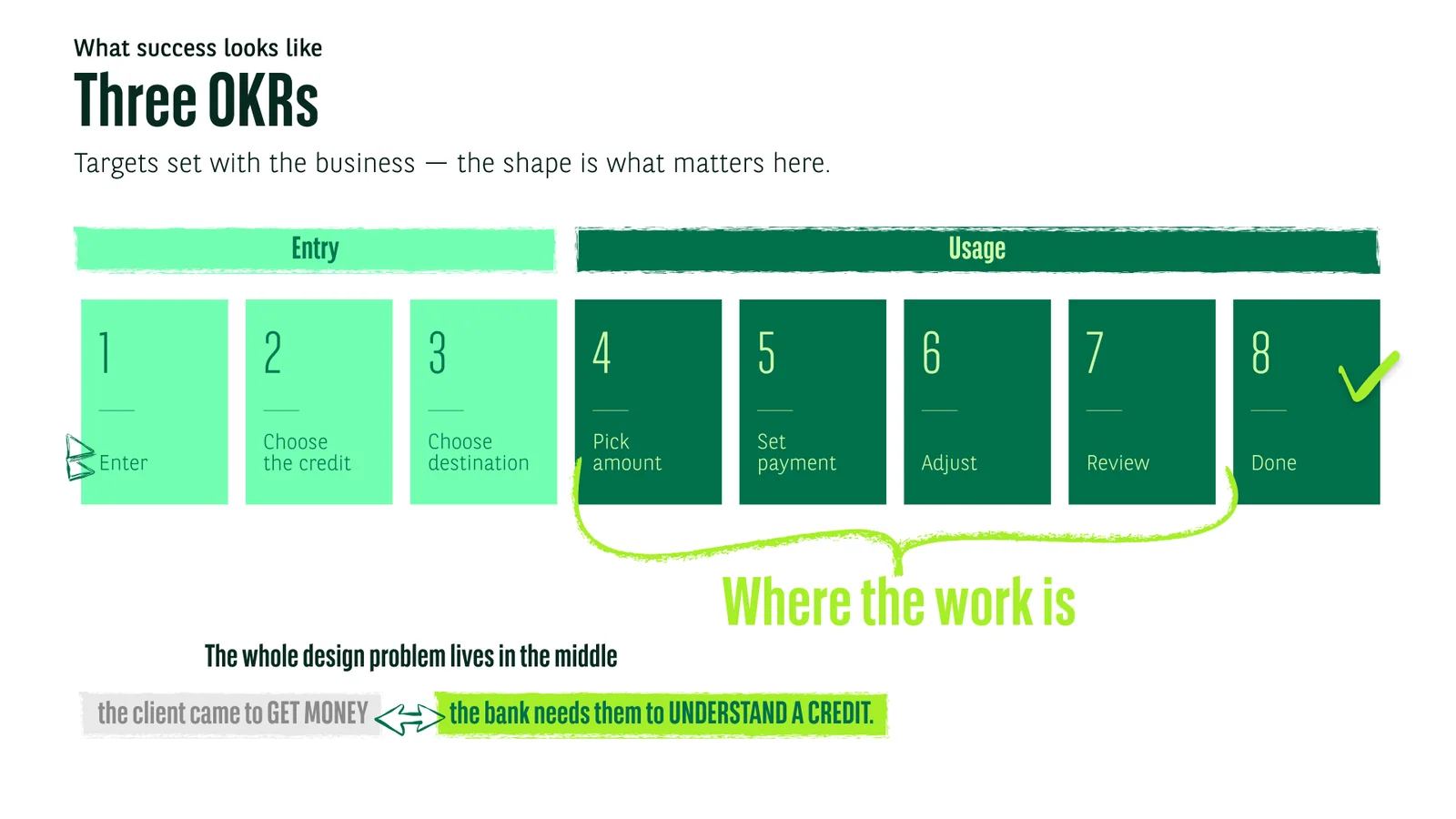
Our research found the cost of that ease. When paying in slices feels painless, people lose track and end up in debt, while European regulation (CCD2) was closing in on buy now, pay later. The bank did not want a copy of these platforms. It wanted a different approach, highly protective of the customer. The brief: design the servicing experience of one new credit, native to the mobile app. Using the credit, not selling it. The result is one hybrid product.
A revolving credit: money set aside that you can use whenever you need it, and repay at your own rhythm.
Any payment can also be split in several slices, the flexibility people love in BNPL, here inside the bank’s own app.
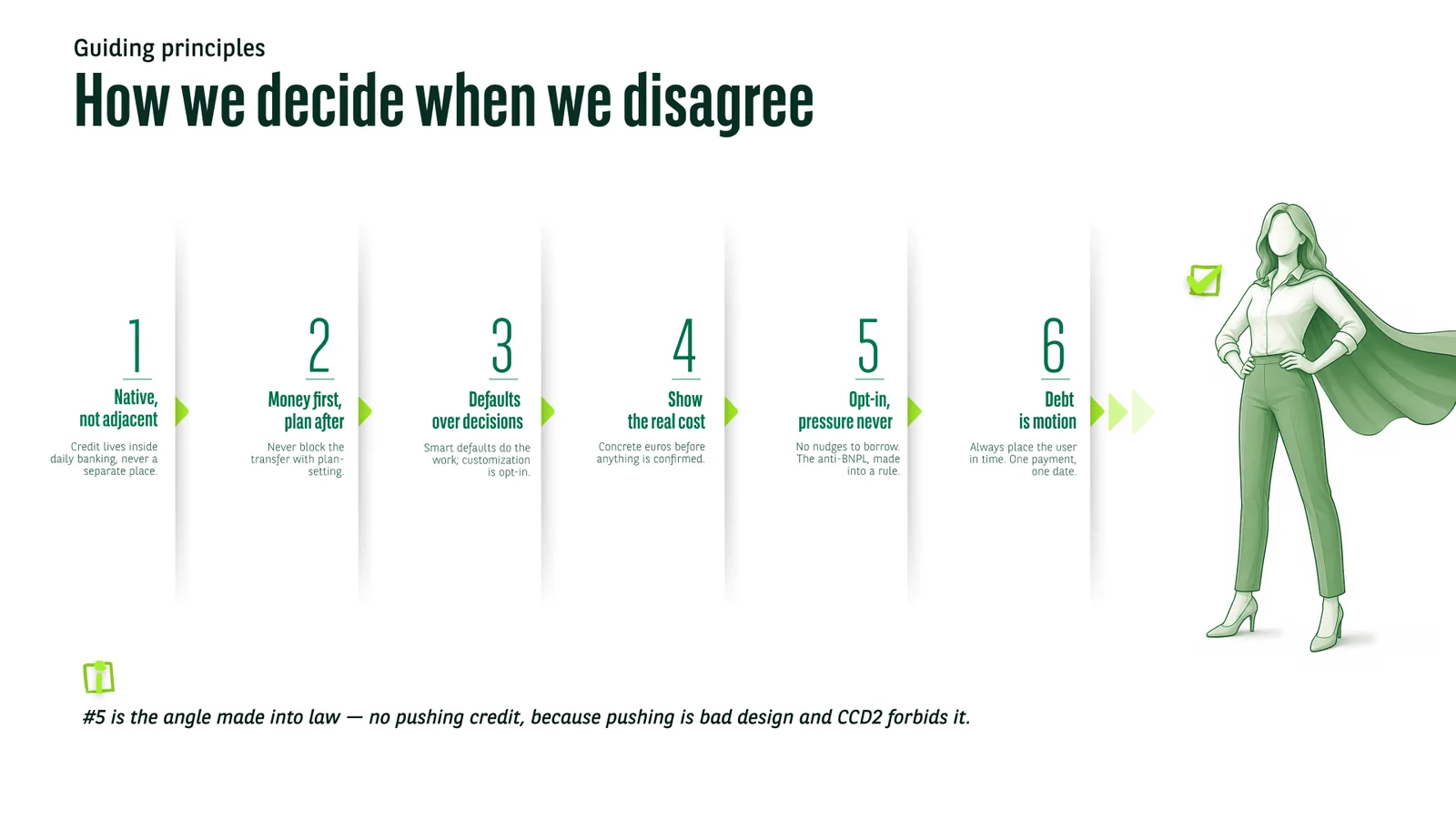
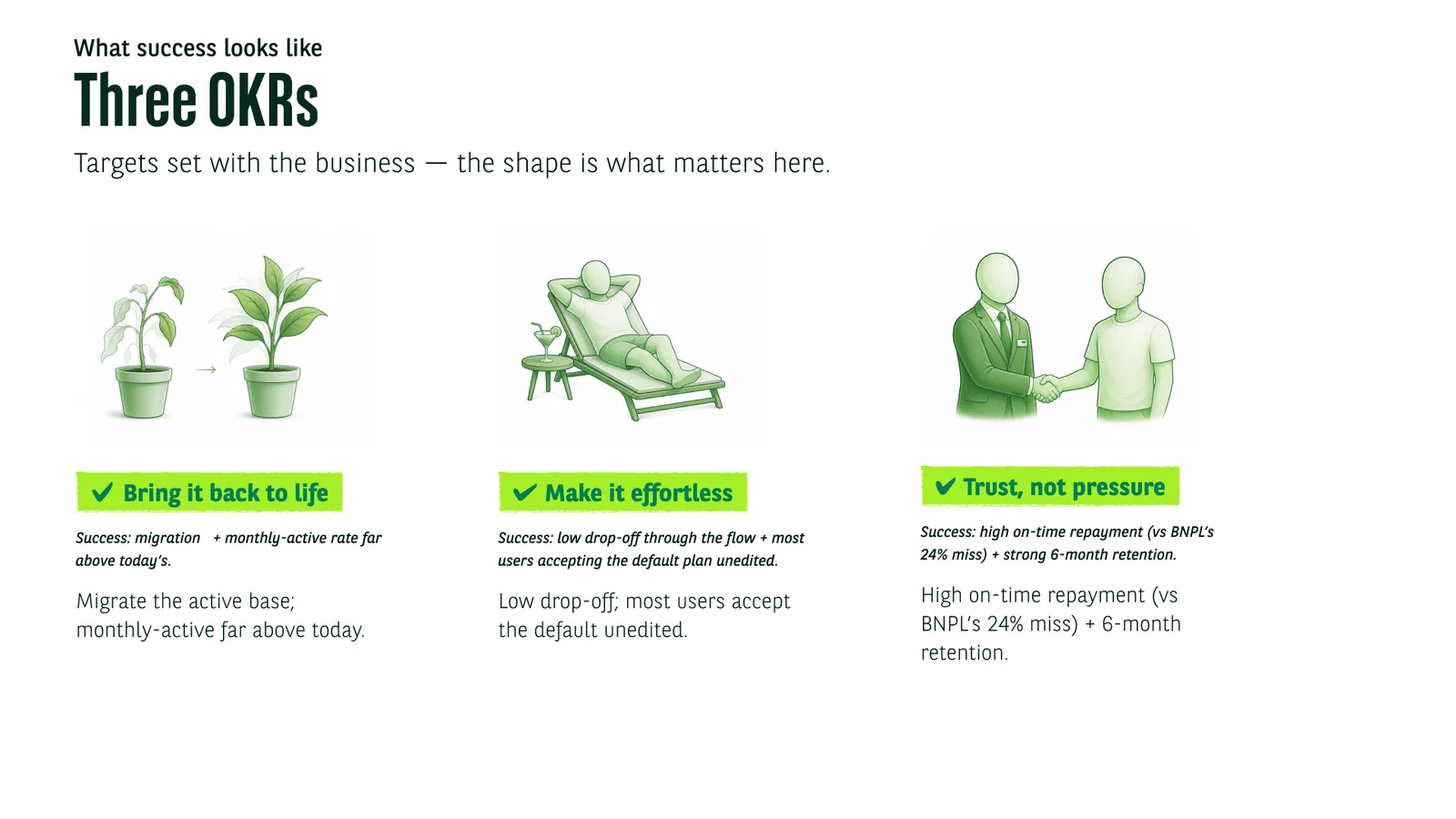
Real cost in euros, no pressure to borrow, one payment and one date. A credit that keeps customers out of debt instead of pulling them in.
Before drawing a screen, I went through everything the bank already knew: usage data of the two legacy products, earlier concept reports, a market study and an omnibus survey on BNPL, and qualitative interviews. It was all regrouped on one board, from problem definition to risks, so the team argued from the same evidence, including how easily split payments slide into debt.
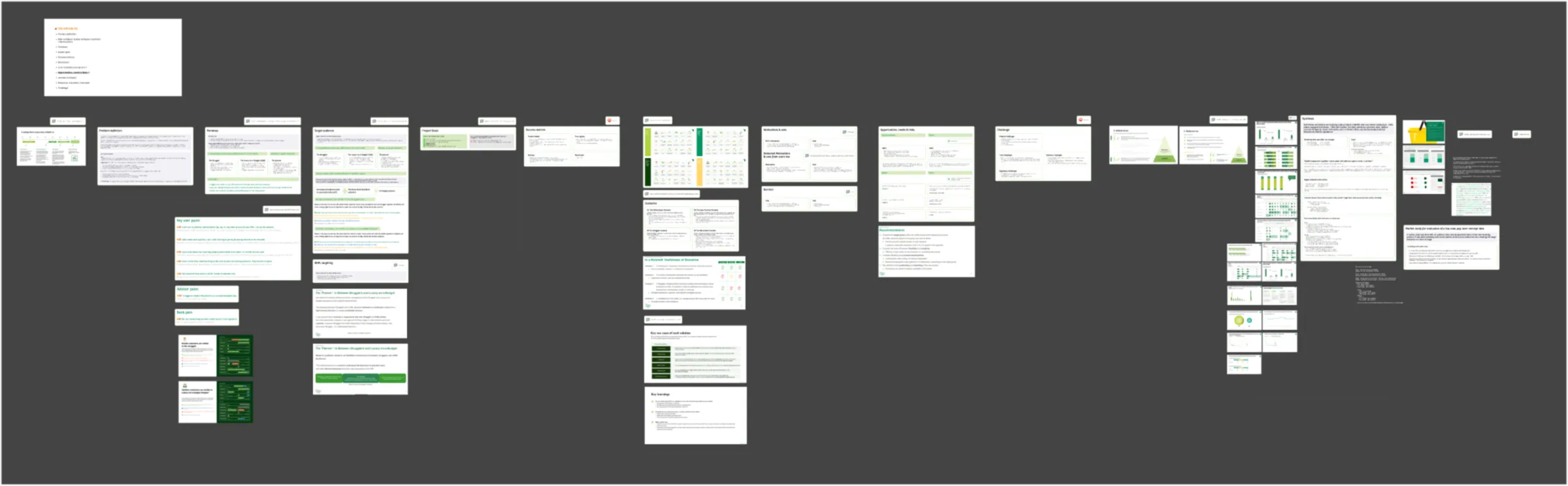
Young people have moved to Klarna, Scalapay and their peers. The people who still use the bank’s credit are established, loyal and already active in the app: people who trust the bank.
When paying in slices feels painless, people lose track. The research on these platforms showed users going deeper into debt than they meant to. That became the problem to solve.
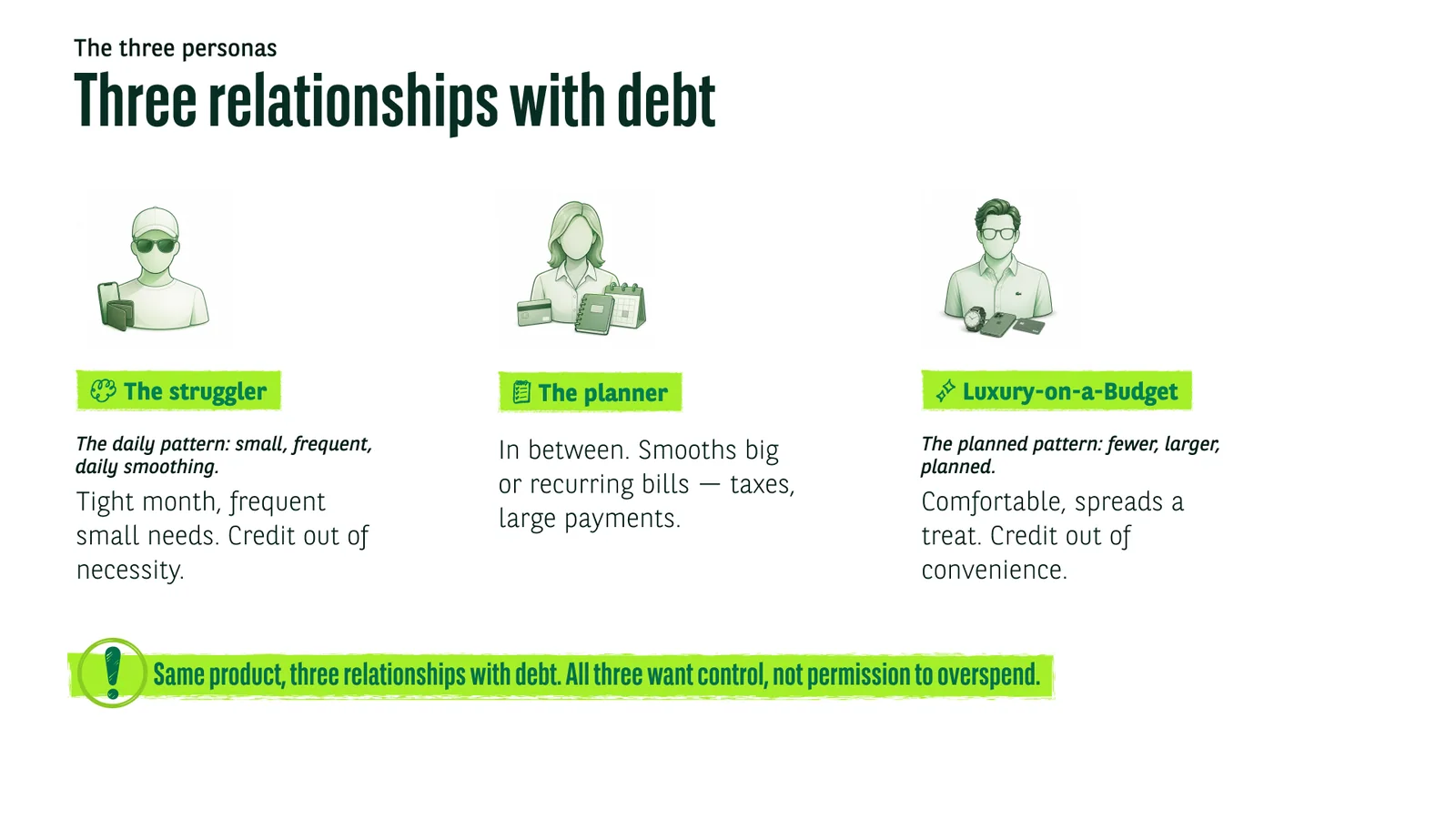
Three relationships with debt came out of the data: the struggler, the planner and the comfortable spender. All three want control, not permission to overspend.
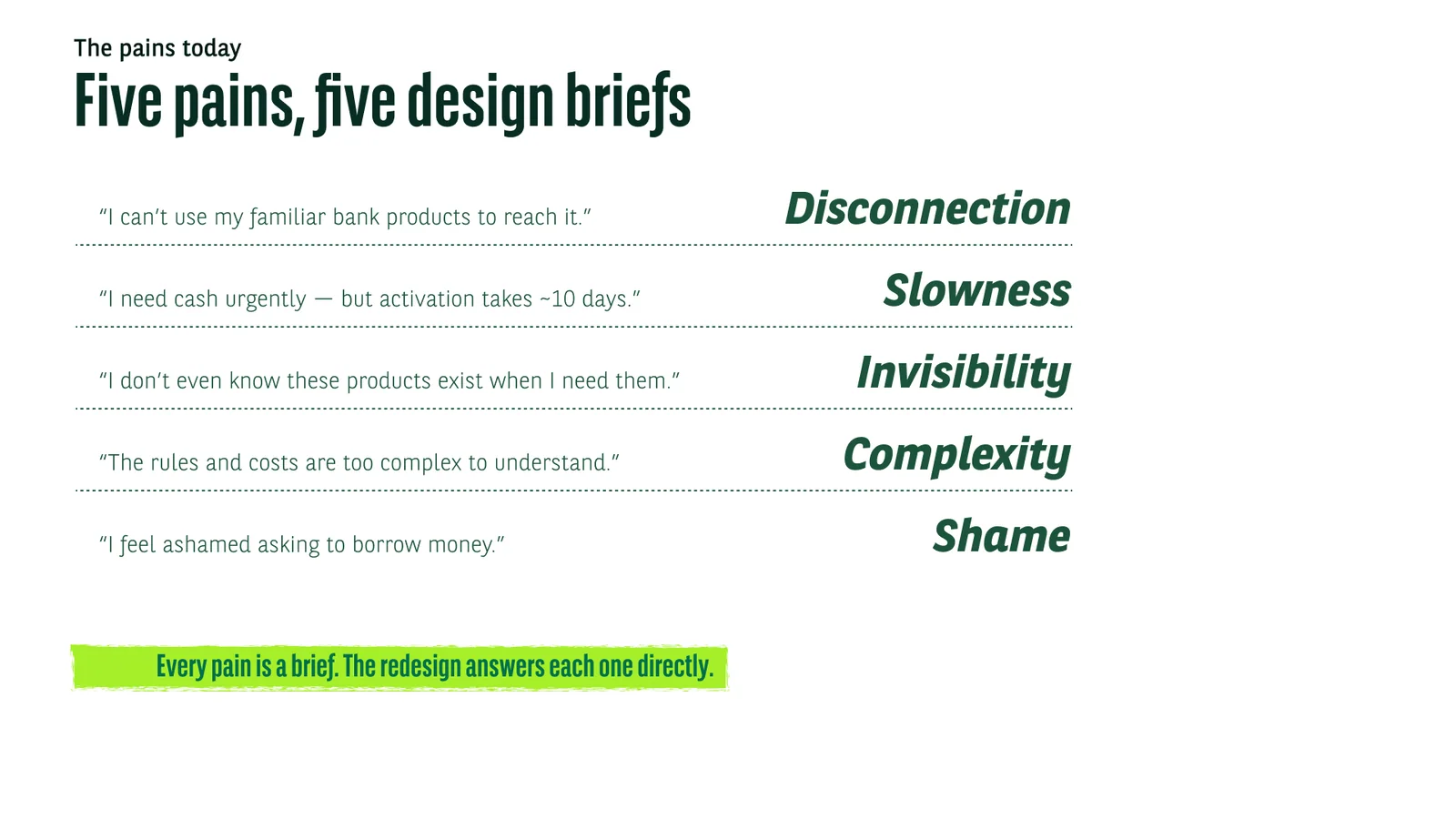
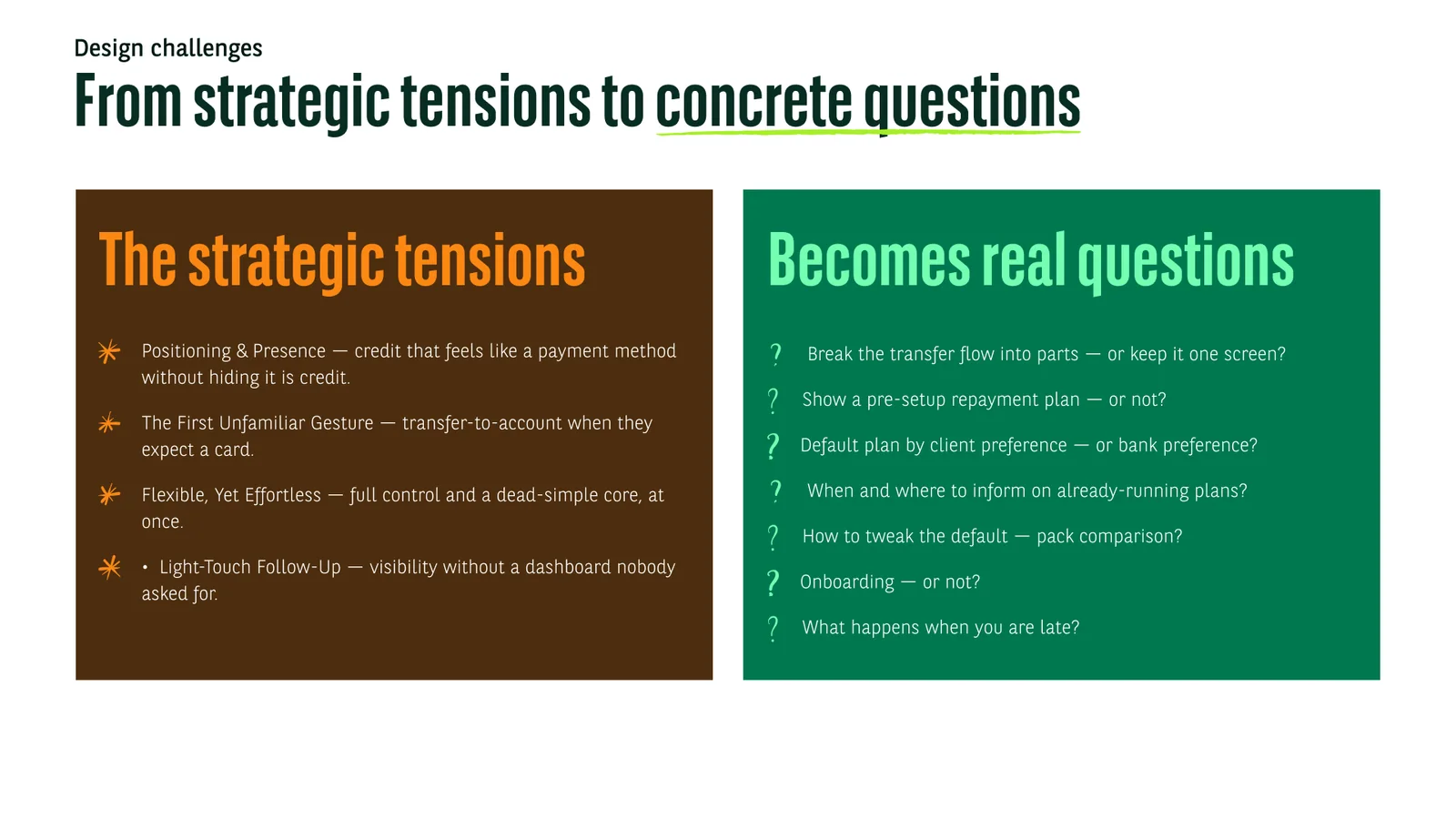
Disconnection from daily banking, slow activation, invisibility at the moment of need, complexity of rules and costs, and the shame of asking to borrow.
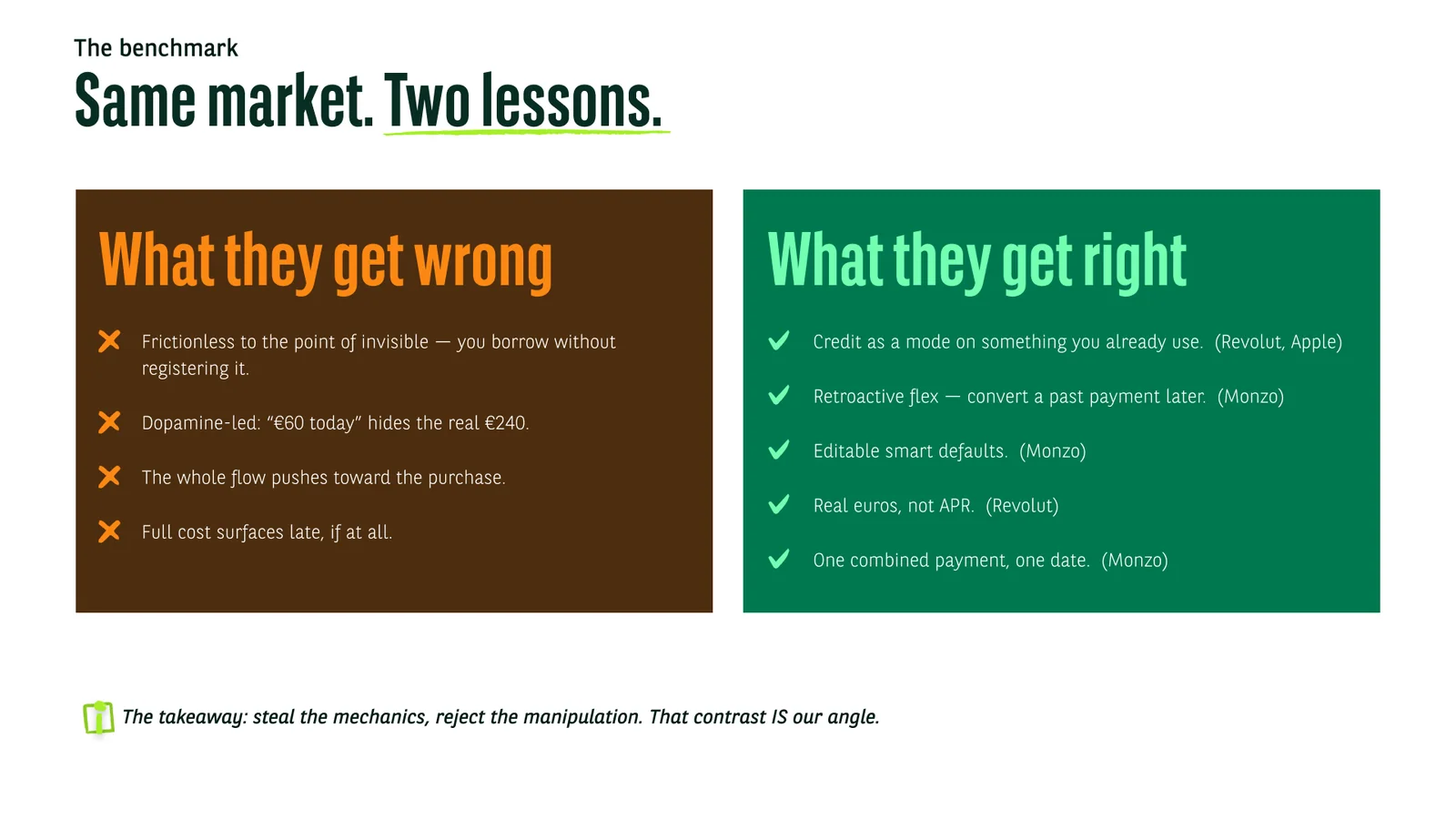
Seven players, from pure BNPL apps to a competing bank and a wallet, screen by screen: how credit is offered, how a plan is chosen, how costs appear, and what happens after. The takeaway fits in a line: steal the mechanics, reject the manipulation.
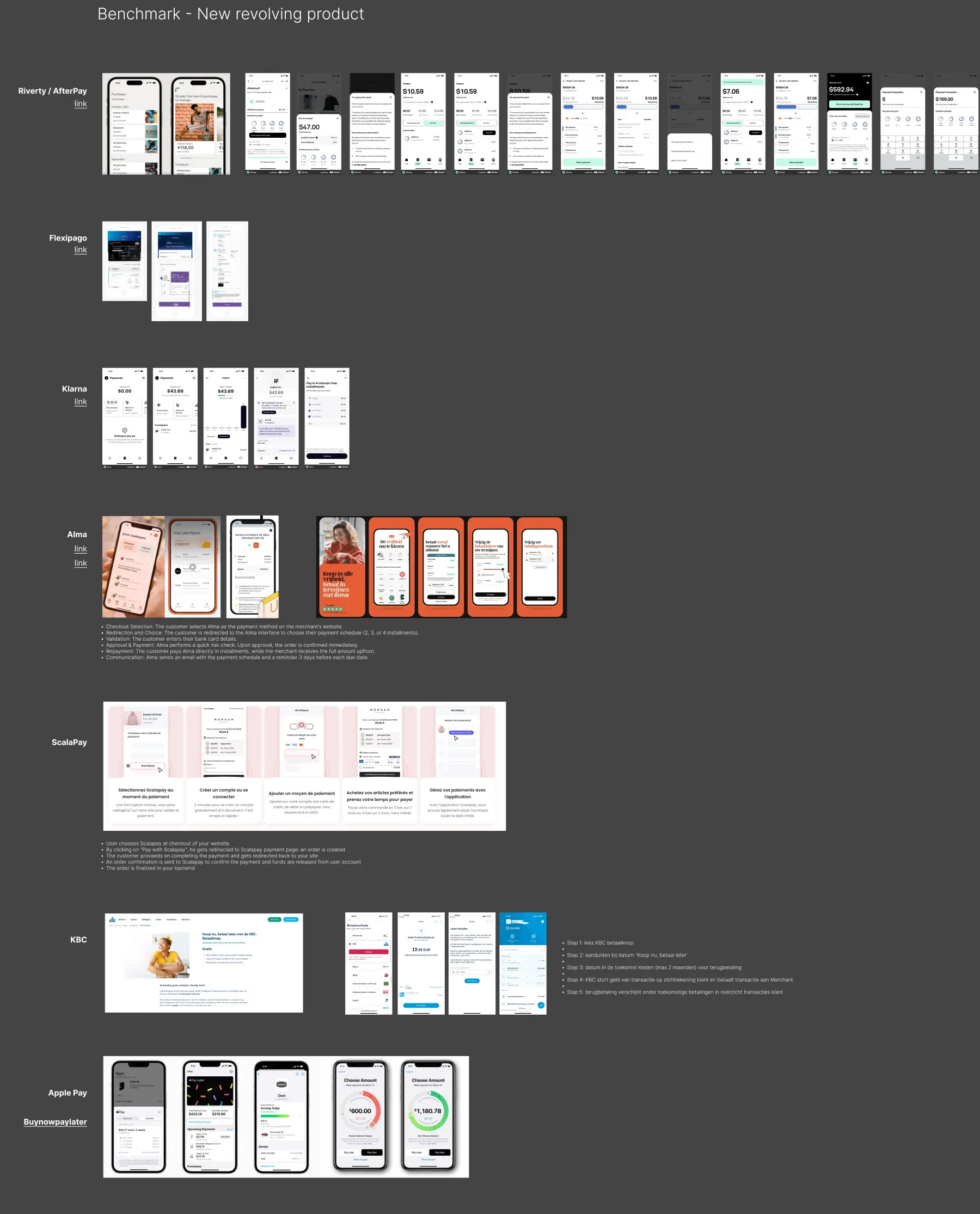
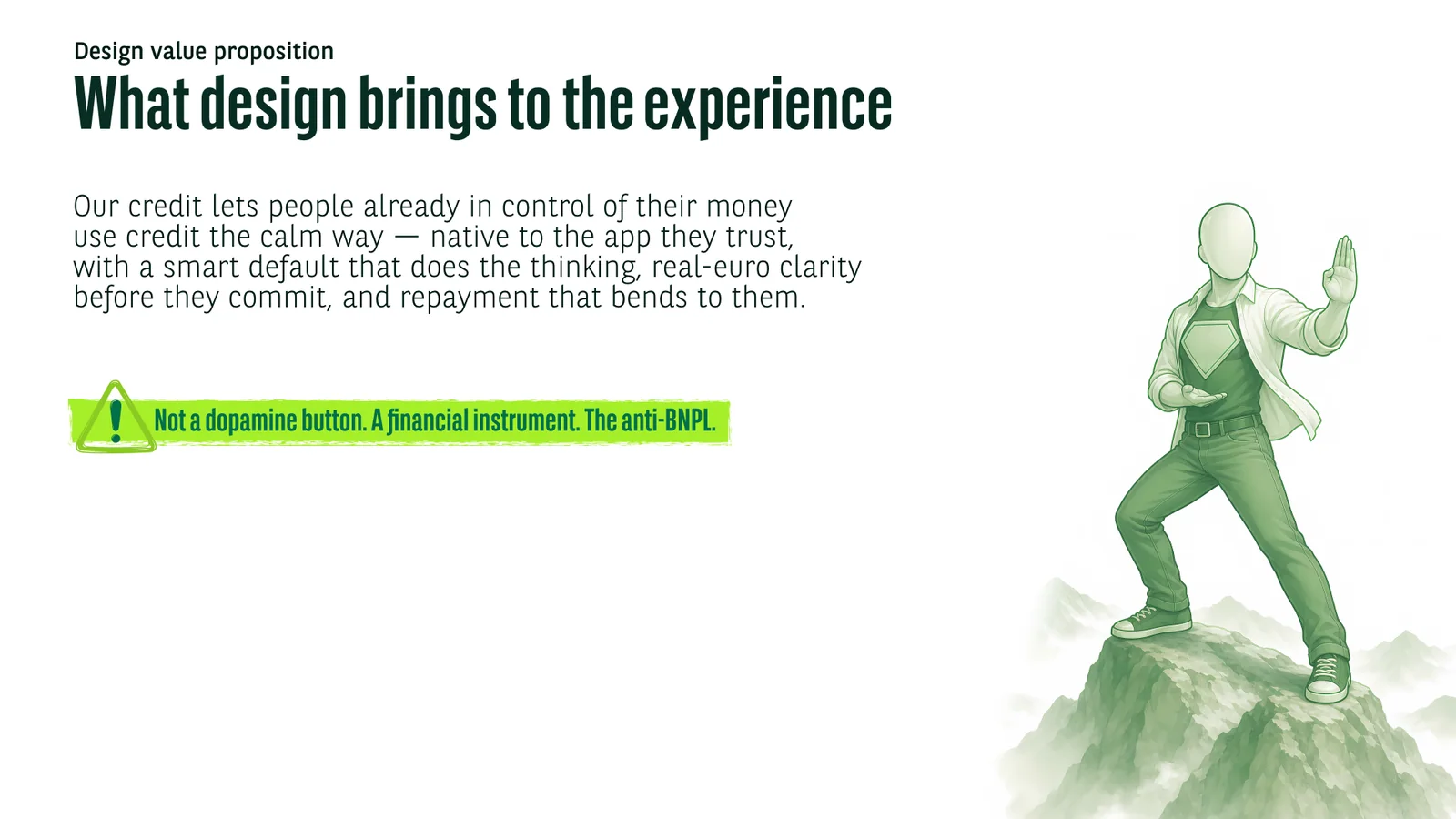
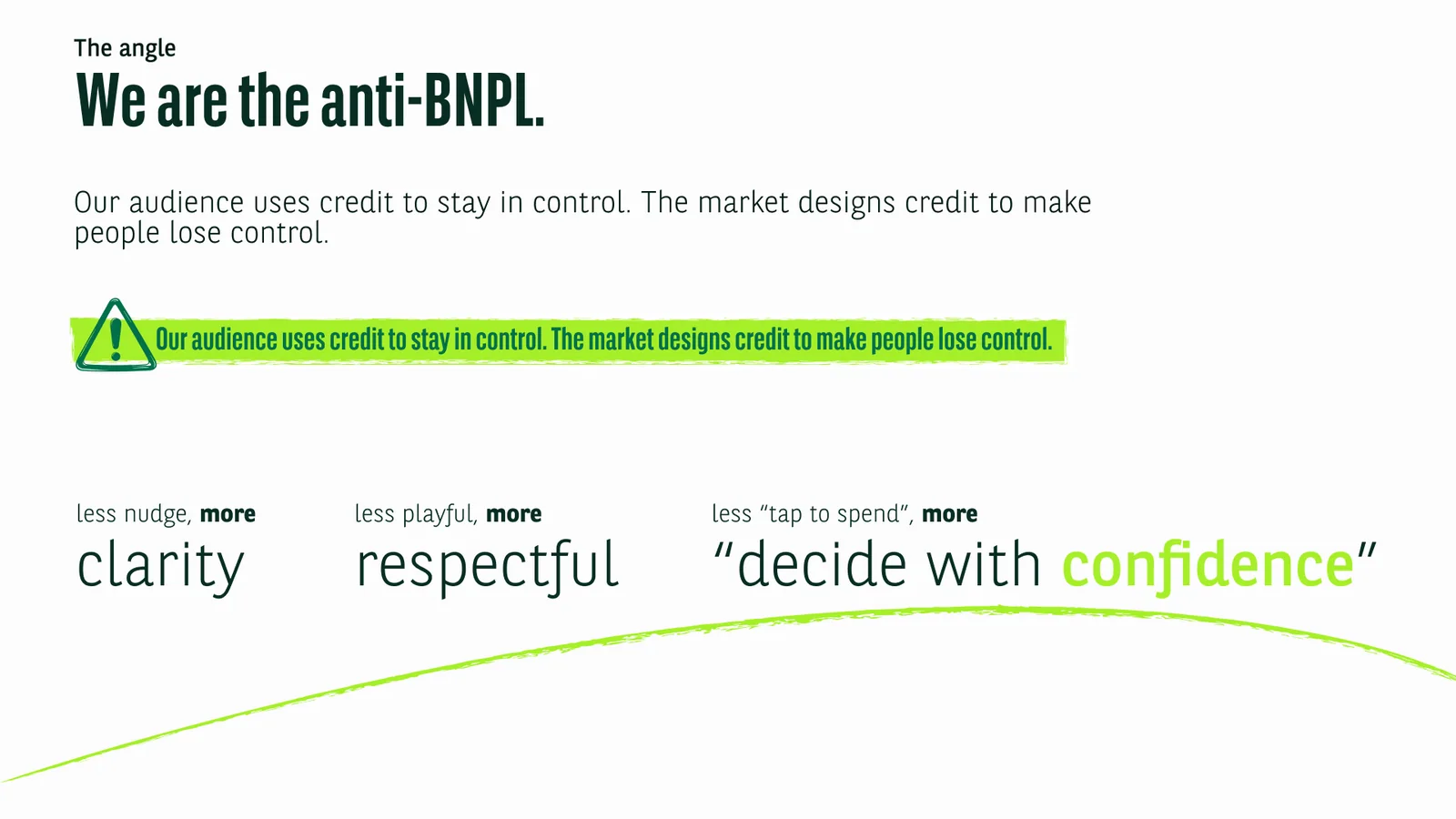
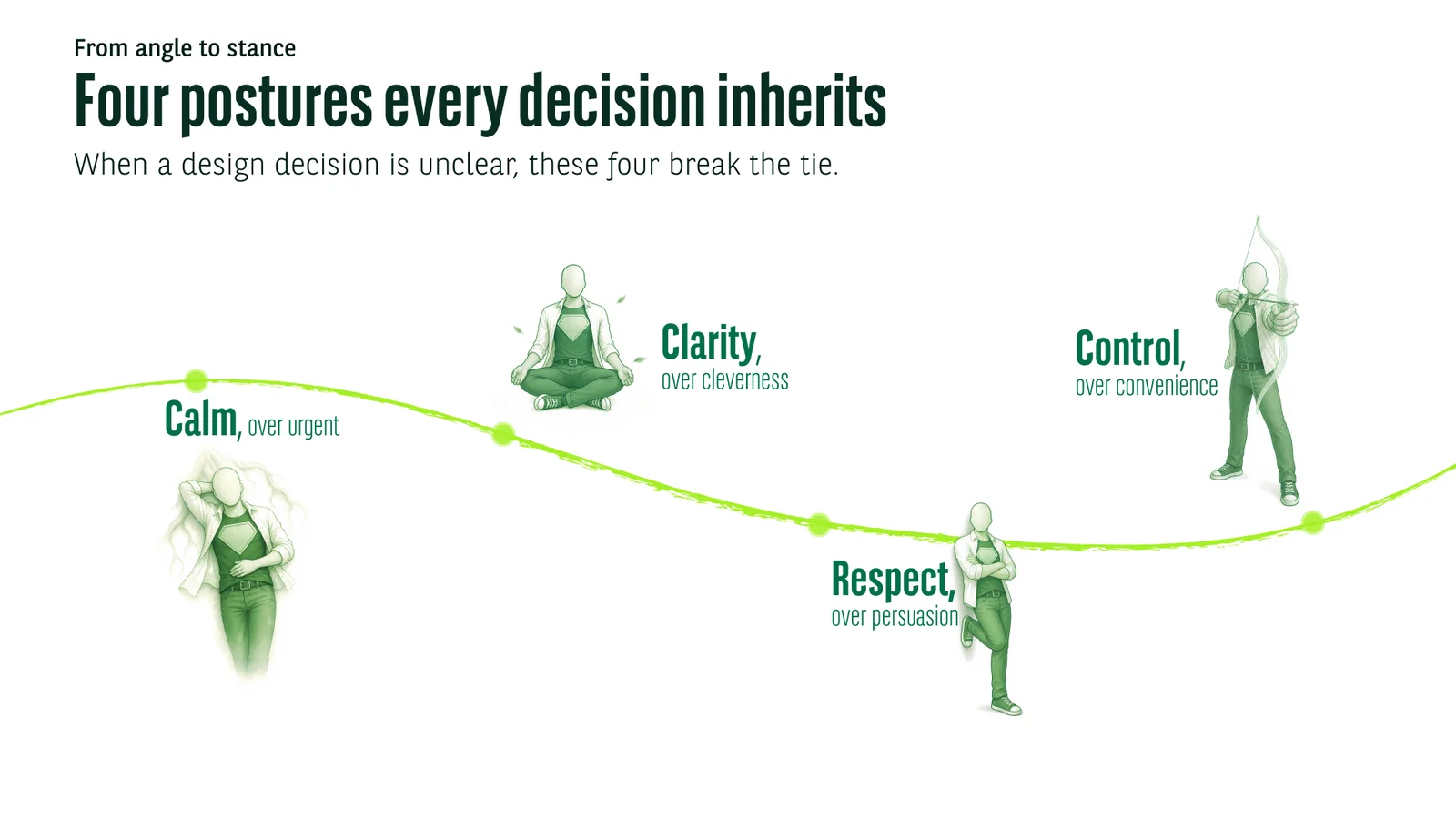
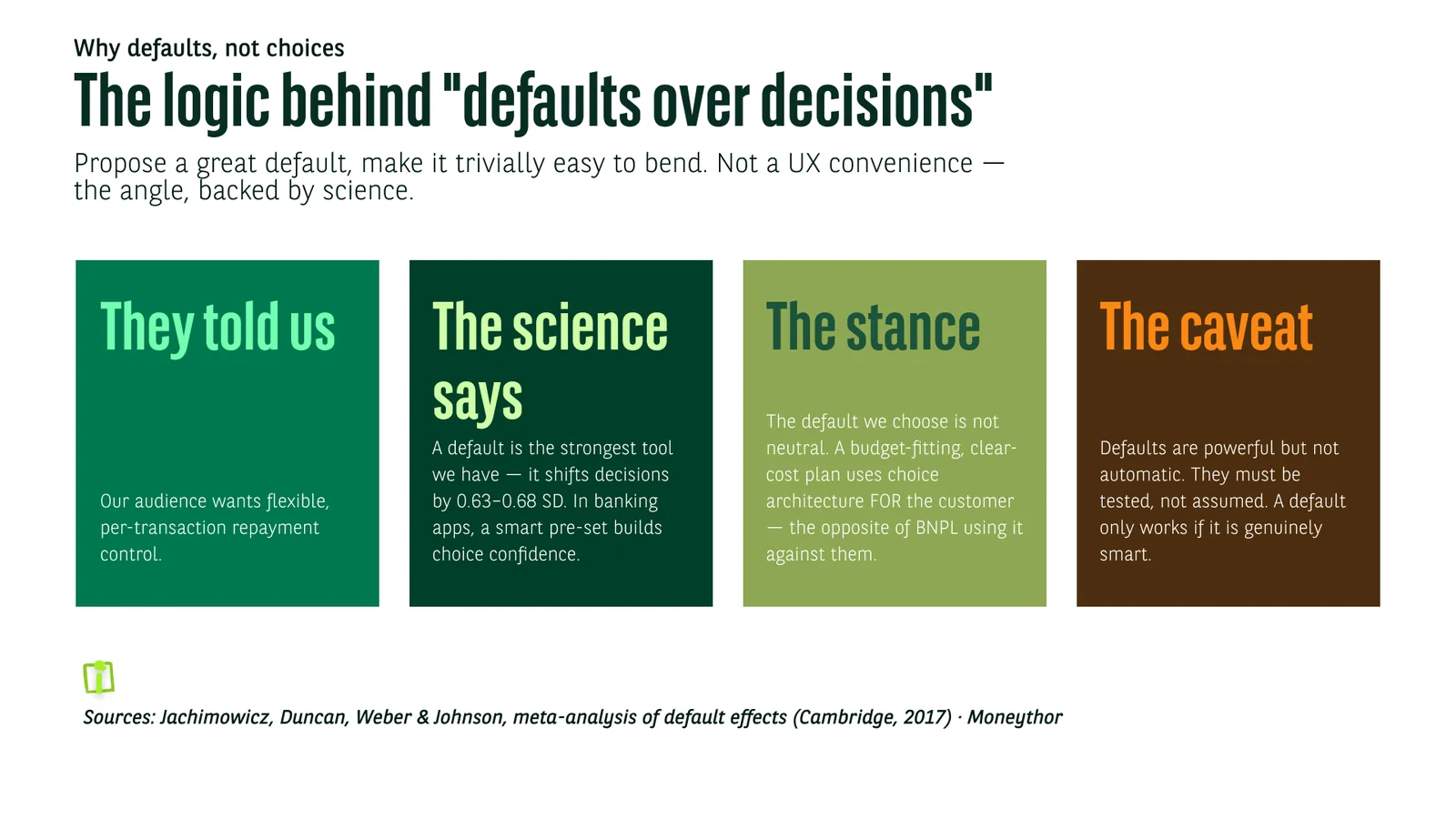
The platforms make paying in slices feel like nothing, and that is how debt creeps in. So the product became the anti-BNPL: calm over urgent, clarity over cleverness, respect over persuasion, control over convenience.
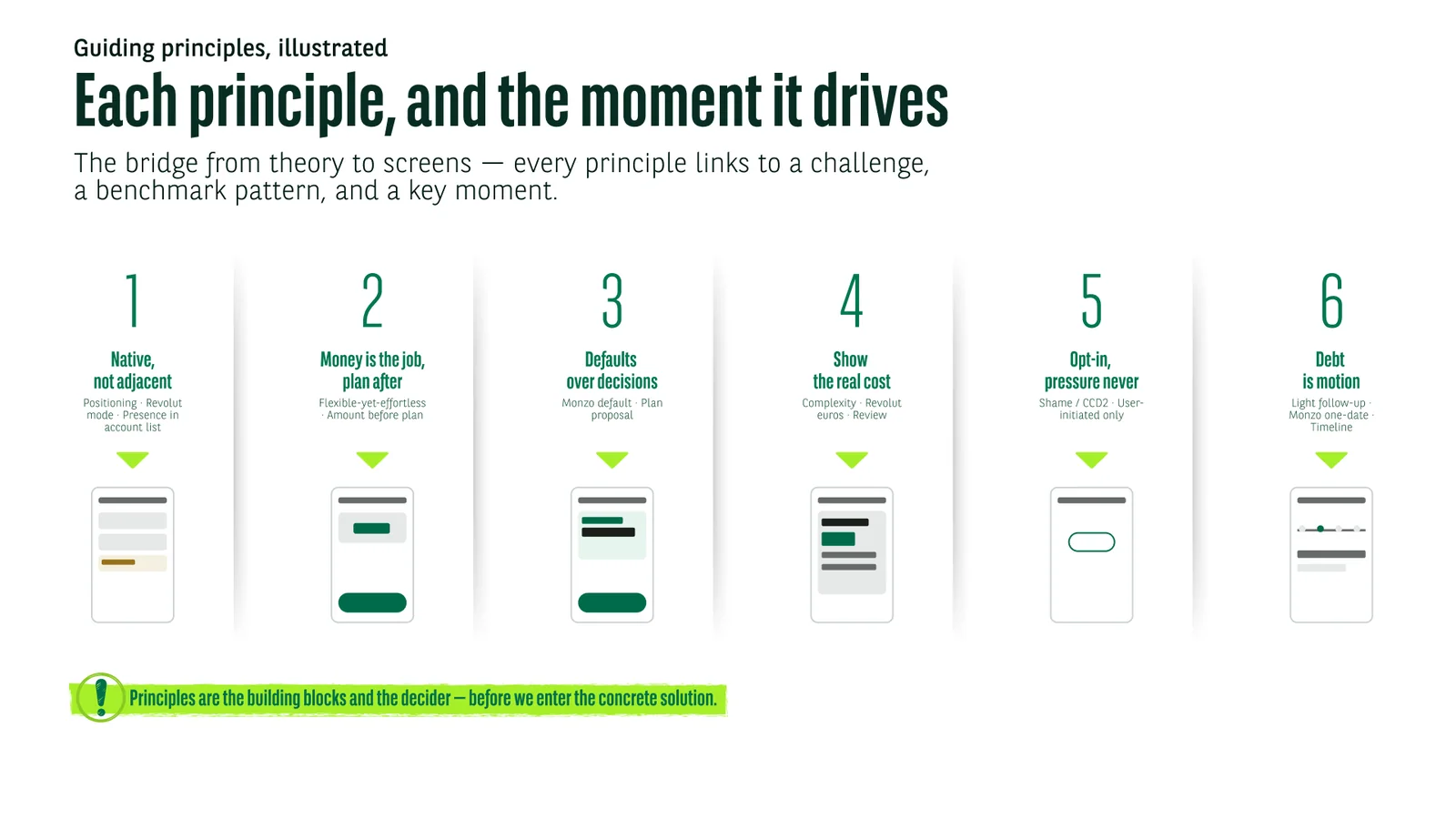
Not a copy with better manners, but a hybrid built to protect the customer first: a revolving reserve to use whenever needed and repay at your own rhythm, with the option to split any payment in slices. Six principles turn that stance into guardrails against over-indebtedness, and became the tie-breaker whenever the team disagreed.
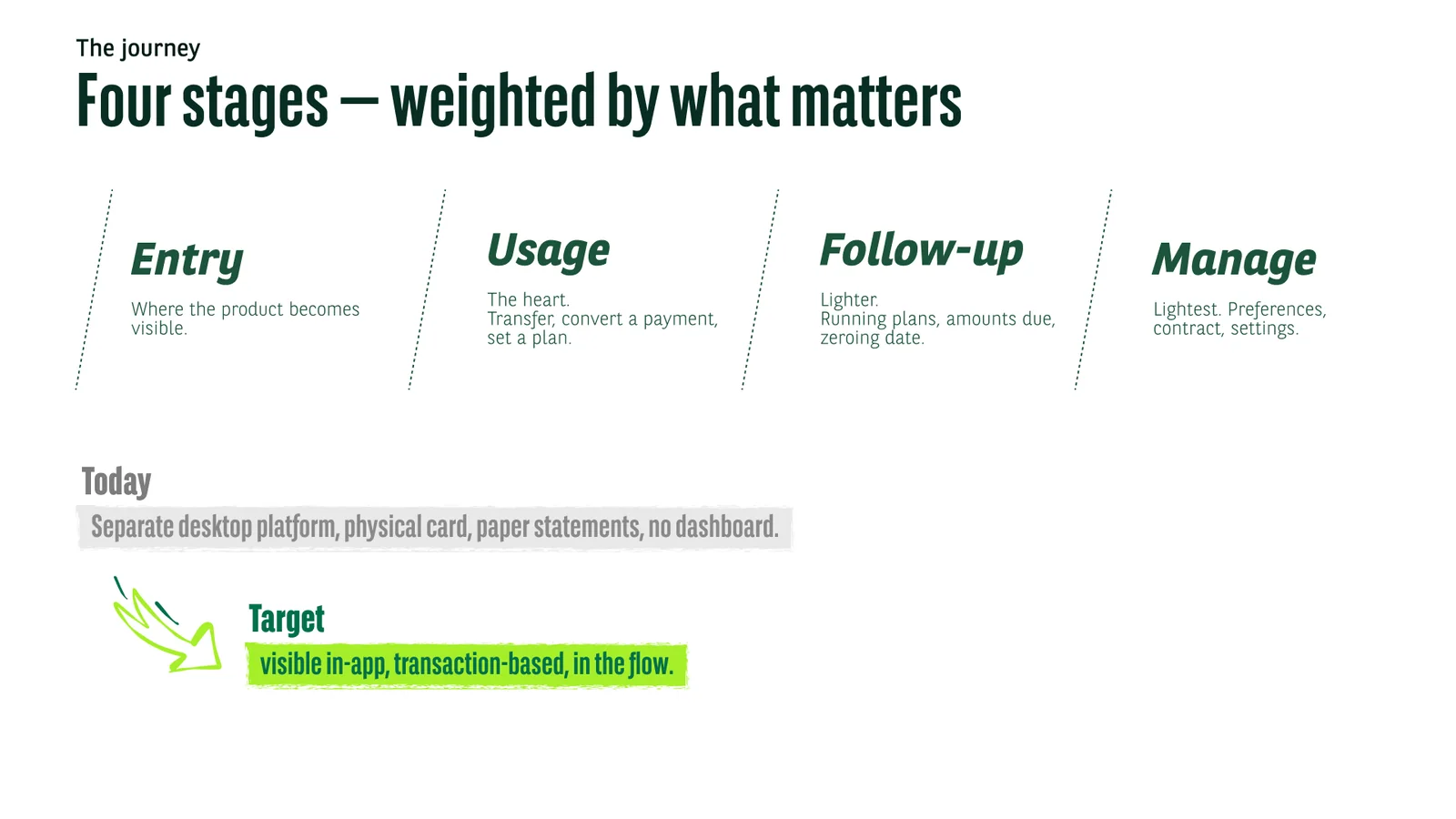
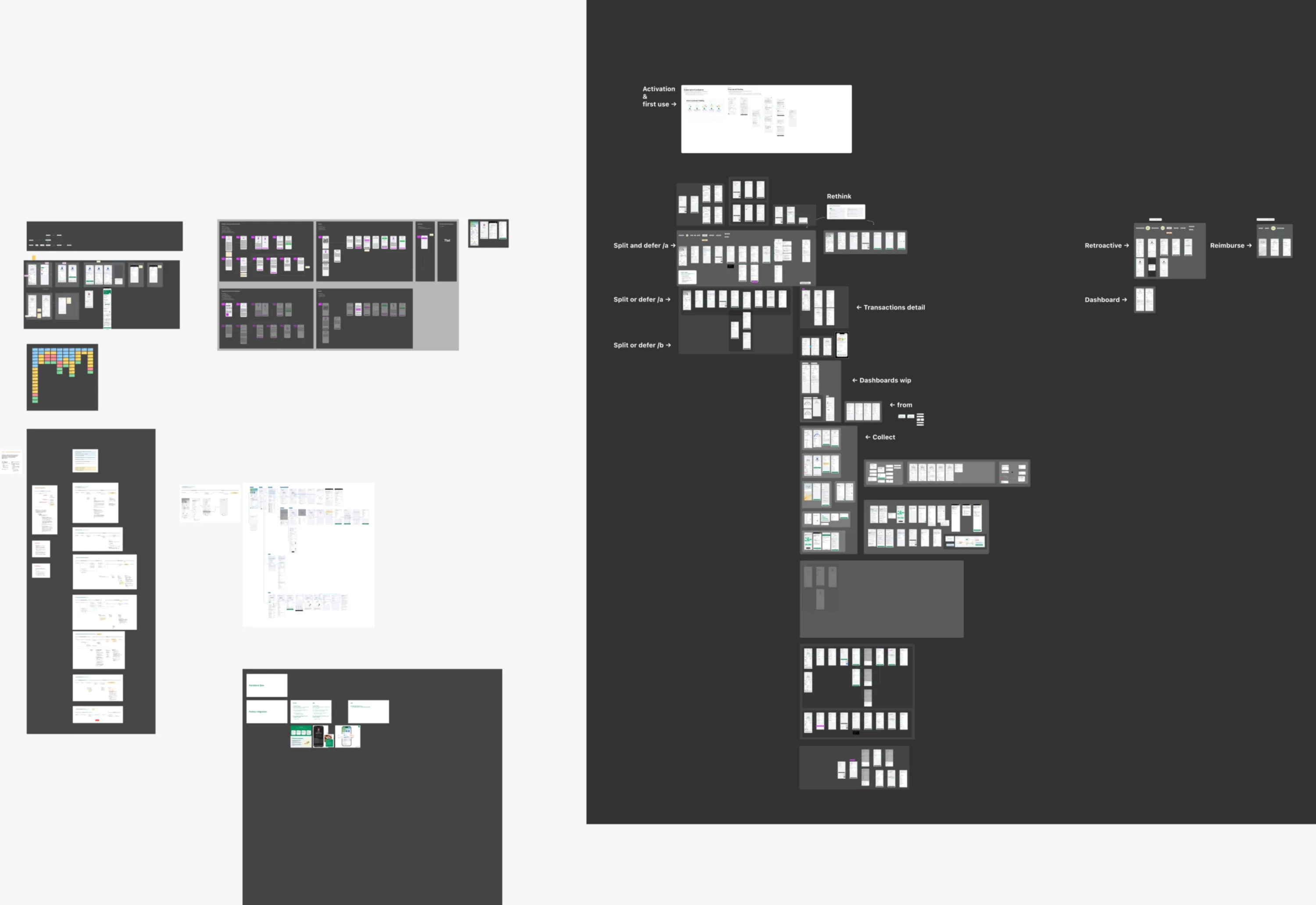
The working file, from far away. On the left, the structure: information architecture, an object map, user tasks, flow maps and every place the product touches the existing app. On the right, the screens: activation, splitting or deferring a transfer, converting a past card payment, early repayment and the dashboards that keep a running plan visible. Each flow was explored in several variants before the team picked one.
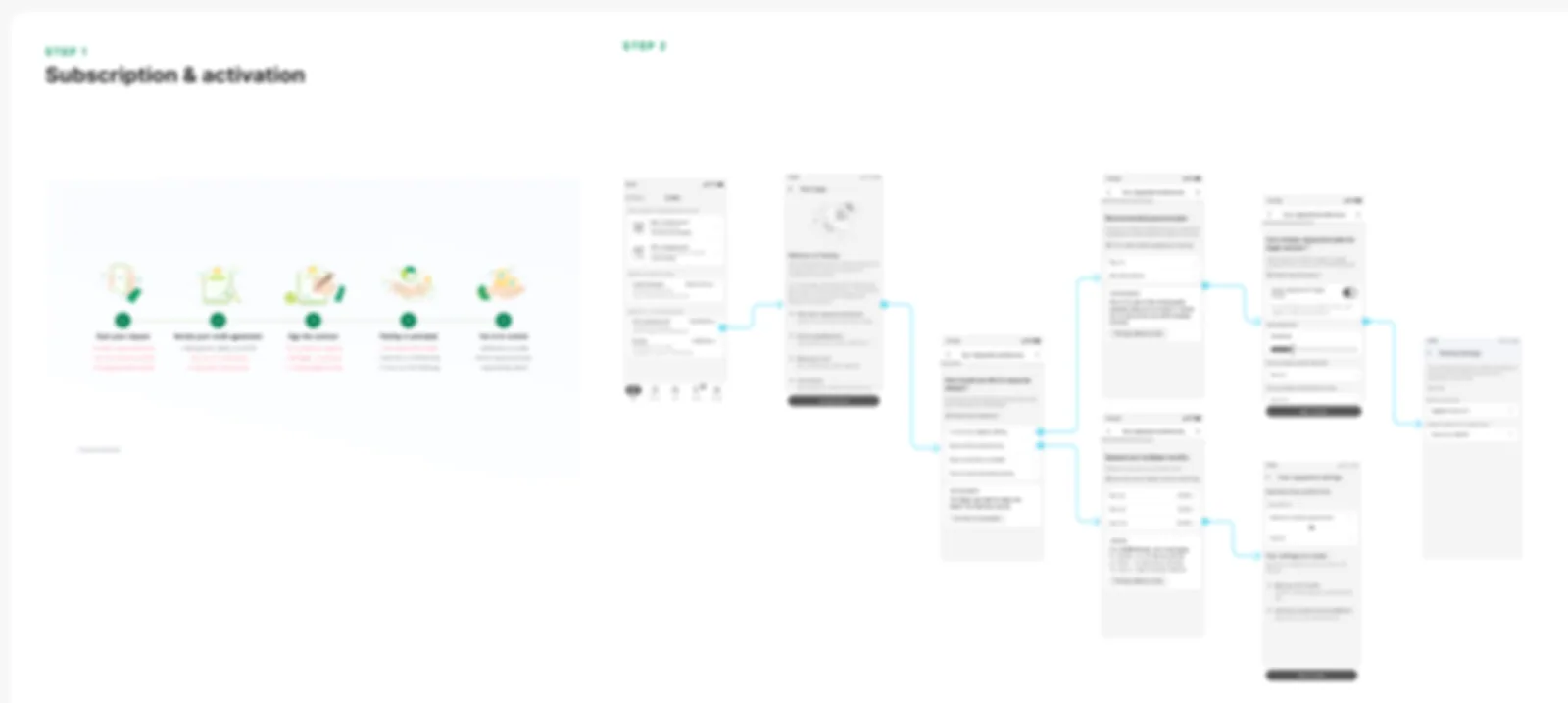
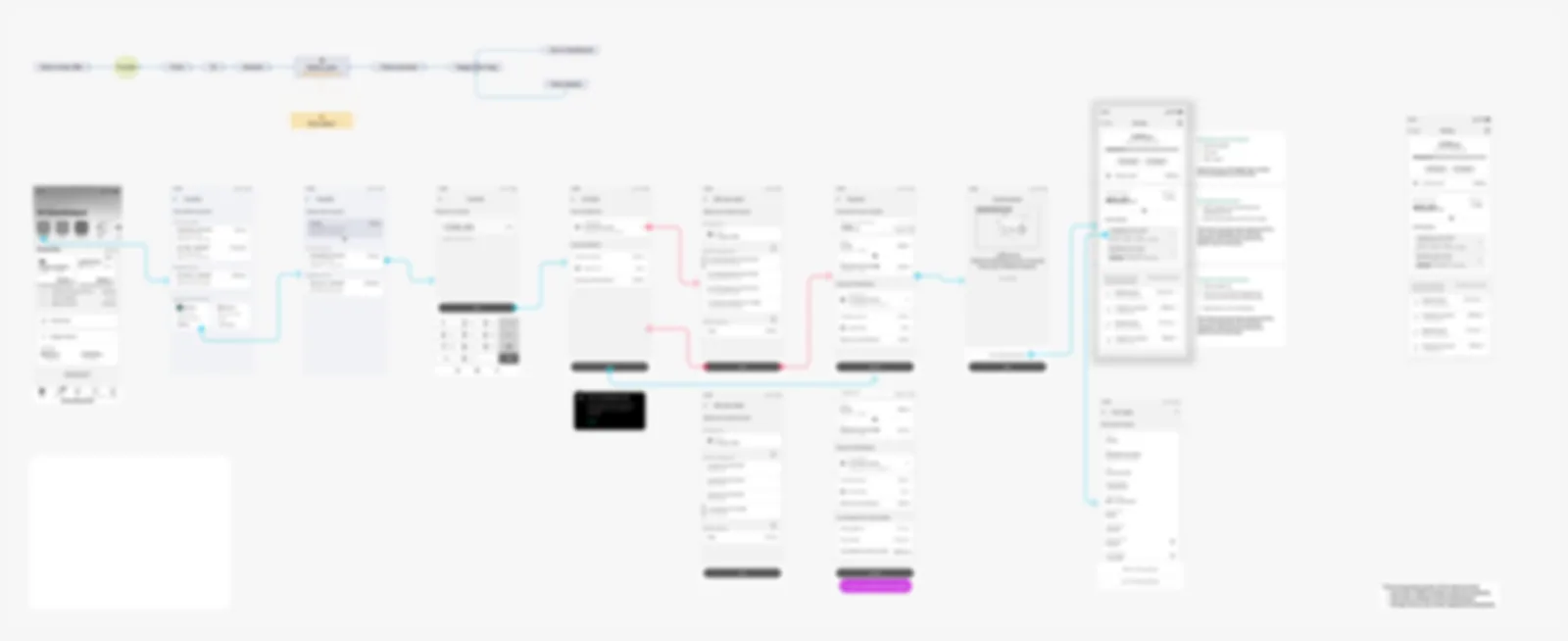
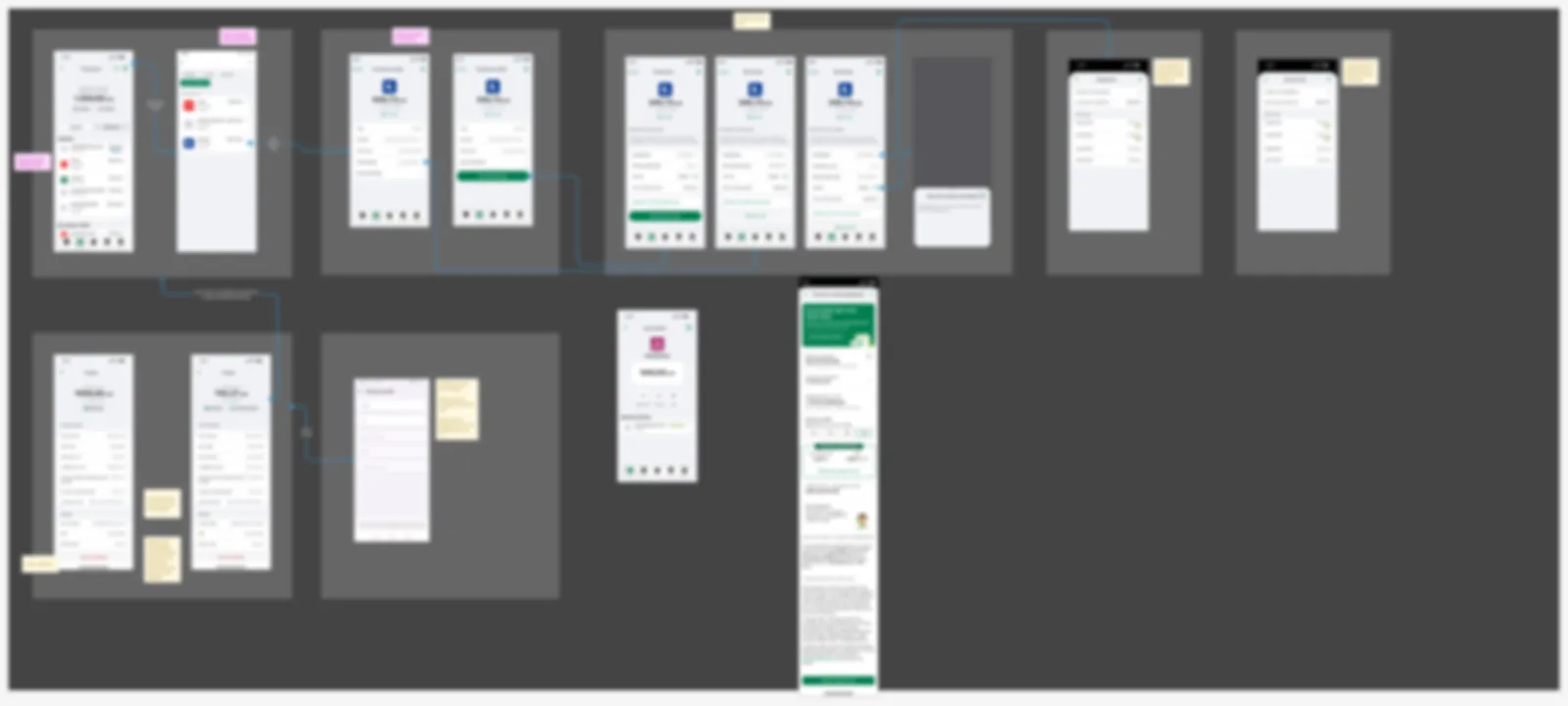
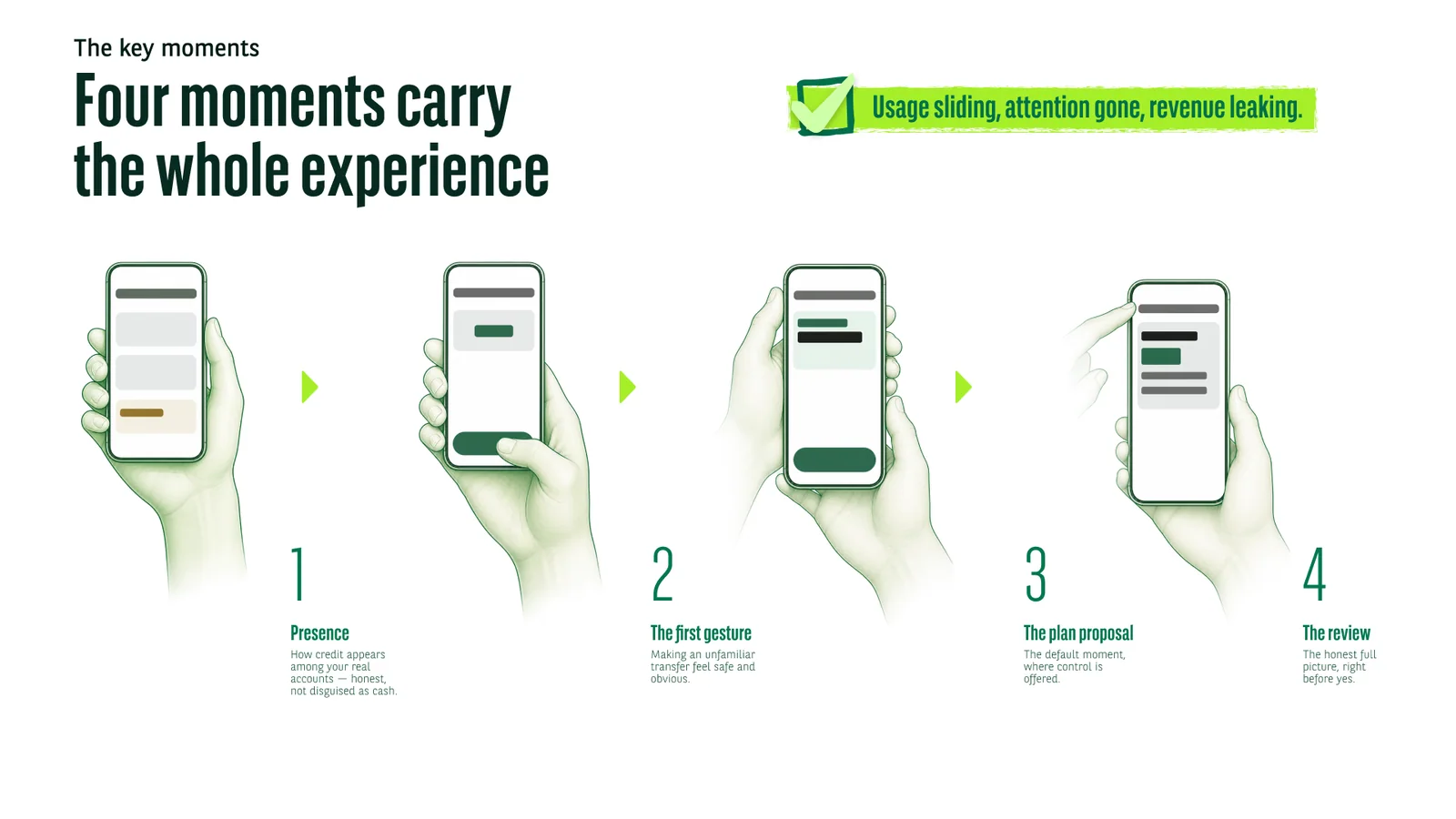
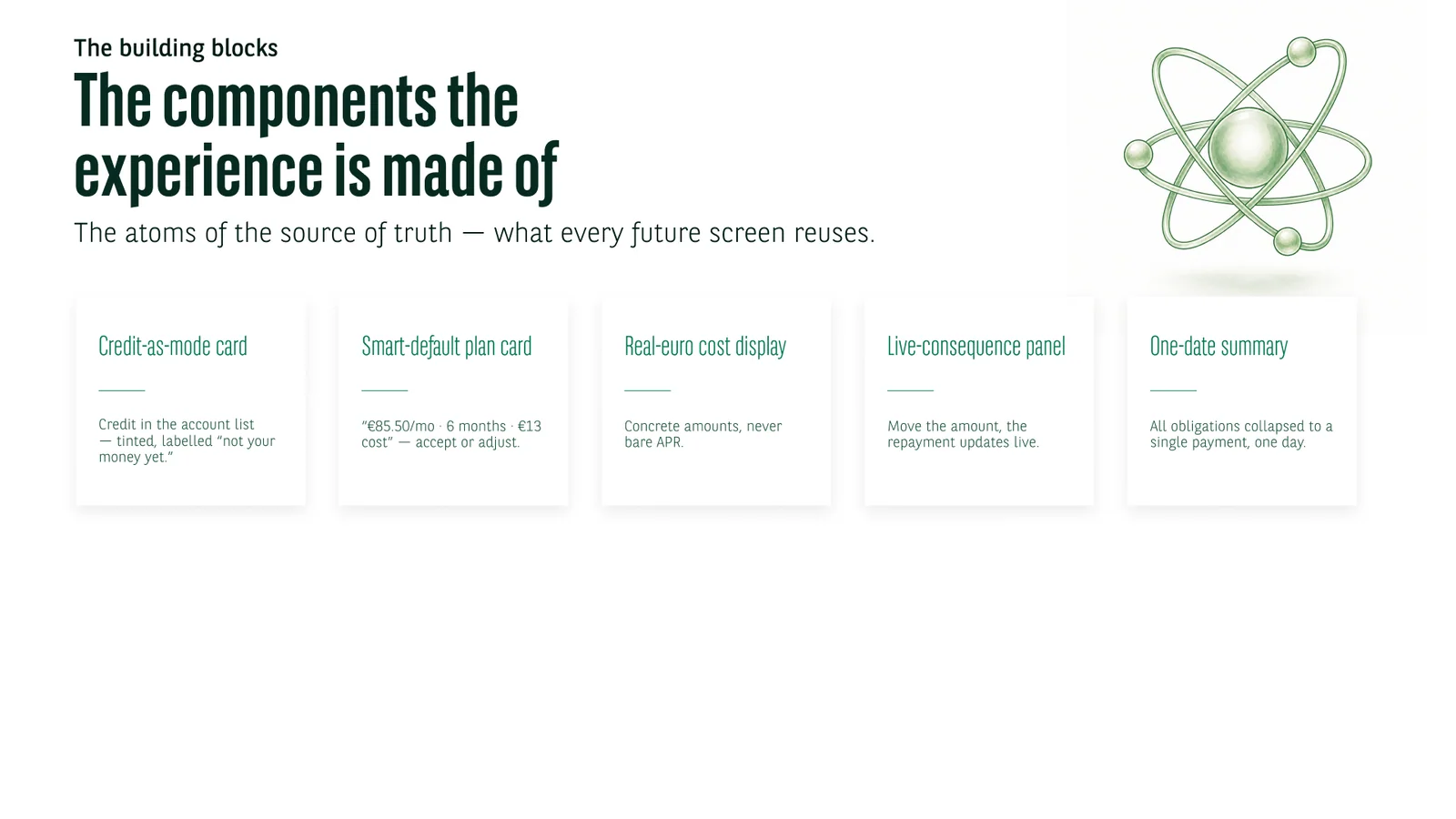
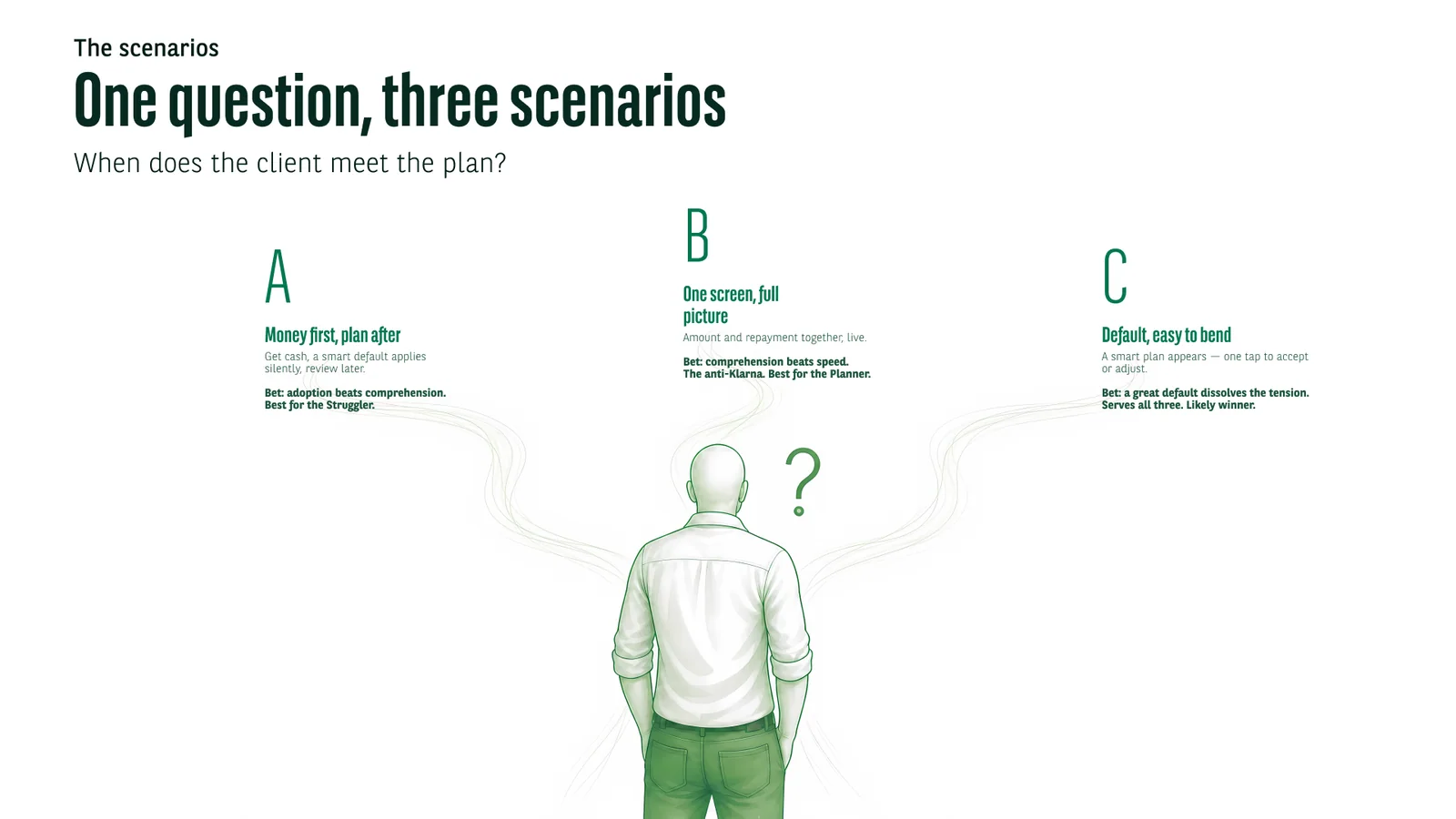
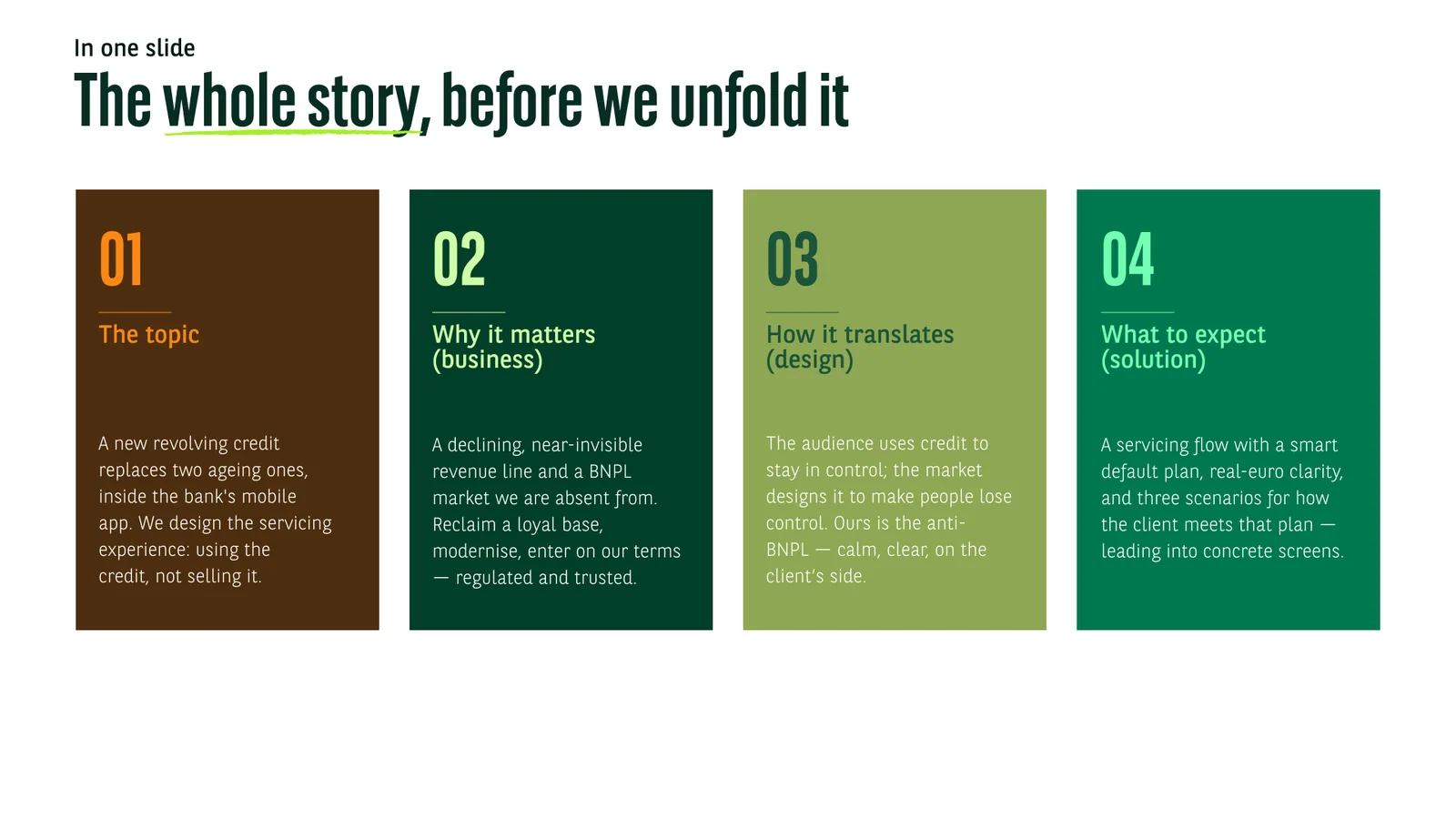
Everything above, told in one story for the business, compliance and product owners: from who they are, to how it should feel, to what we build. Five chapters, custom illustration throughout, and the decision tools the team kept using afterwards.
Drag or swipe to browse, or focus the screen browser and use the arrow keys. Press Enter or select Full size to enlarge the current screen.
Drag to explore · Click to enlargeSwipe to explore · Tap to enlarge